

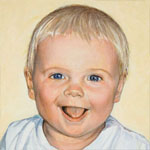

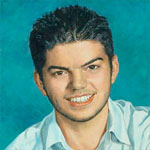

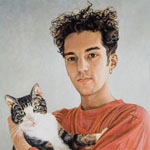
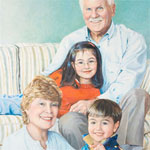
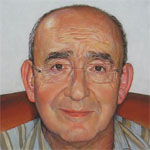
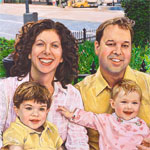
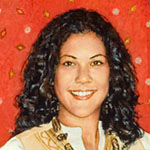
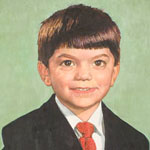
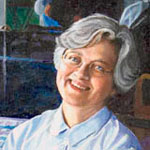
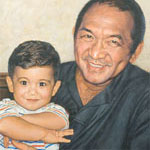
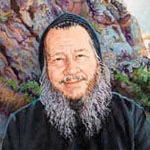
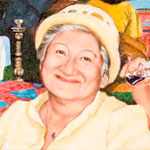


This is part of a series of lively, fun, and challenging study guides illustrated by my artwork about Russian history. (The first, Introductory Study Guide is here).
In addition to being an artist, I have a Ph. D. in Russian History from the University of Michigan. My new paintings and mixed media works about Russia are collectively titled PLAYGROUND OF THE AUTOCRATS.
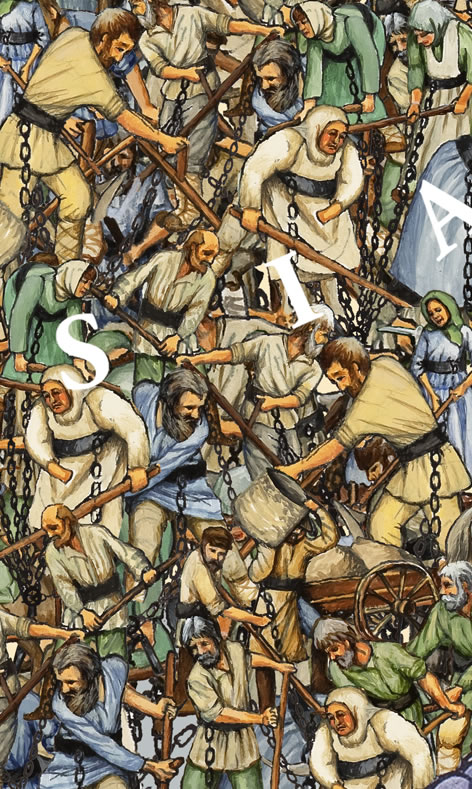
Detail of left panel of DRESS IT UP IN RESPLENDENT CLOTHES, by Anne Bobroff-Hajal
_____________
The 1917 Bolshevik Revolution destroyed tsarism and instituted a radical new social order, Soviet Communism.
Or did it?
Beginning soon after the Russian revolution, “Communism” became the 20th century American boogeyman. China had its revolution in 1949, and many in the US saw Communism as a world-wide plague that might infect whole chunks of the globe. We went to war in Korea and Viet Nam to try to stop it.
What was Soviet Communism anyway?
For peasants – who made up more than 80% of Russia’s population in 1917 – the central, defining element of Communism was the collectivization of agriculture. Peasants were forced to become members of large collective farms on which they (at least in theory) tilled the land jointly, gave most of the crops to the state, shared the rest, and lived mainly off what they grew in small “private plots” in their yards.
Well, the Cold Warrior might say, wasn’t that just like those dictatorial, commune-loving Commies, taking away people’s private property and telling them what to do?
Well, actually…many Soviet peasants felt collectivization was a return to serfdom. Lynne Viola, in Peasant Rebels Under Stalin, writes that as peasants were forced into collective farms (“kolkhozy” in Russian), they “rebelled against what many called a second serfdom….” (p. 3; my emphasis)
Under tsarism, serfdom had bound peasants to their lords’ estates for life. They were obligated to work on the serfowner’s estate and/or pay their lords either in kind or cash.
Serfdom lasted for centuries in Russia; it was legally abolished in 1861, within decades of the end of tsarism.
Discussion Question:
Was collectivization part of a revolutionary new ideology, Communism? Or was it essentially a return to serfdom? (continued below images)
Detail of left panel of DRESS IT UP IN RESPLENDENT CLOTHES, by Anne Bobroff-Hajal
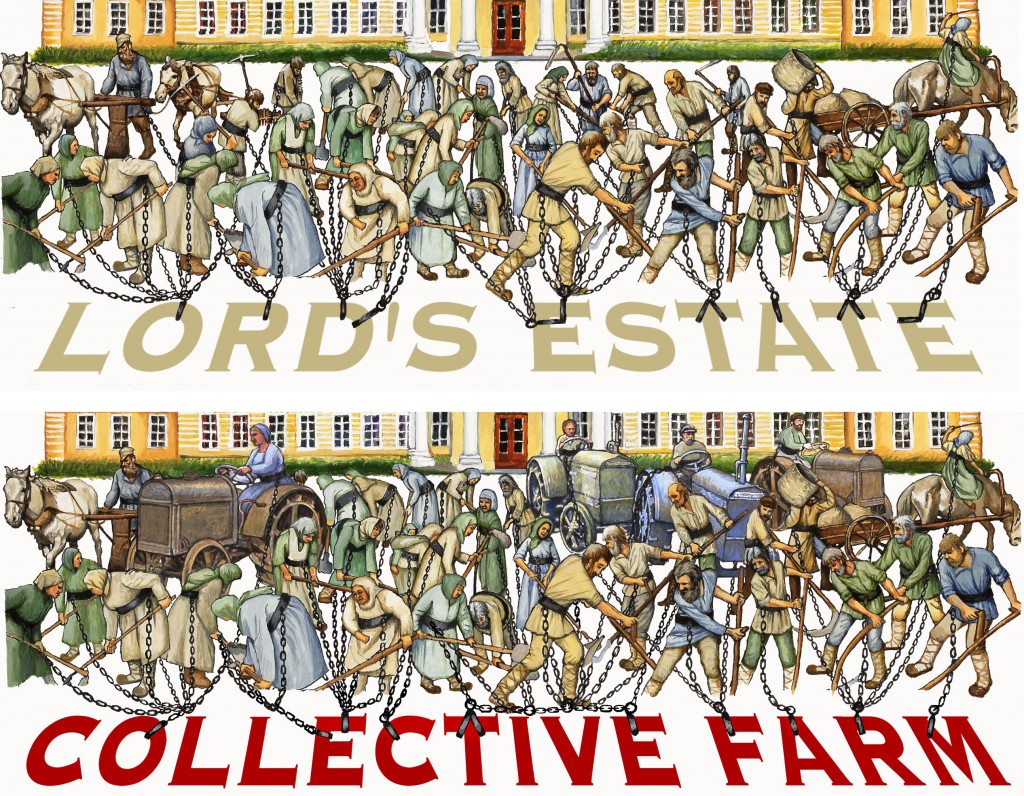
Can you pinpoint the similarities and differences between my painting/collage above and the one below?
Detail of right panel of DRESS IT UP IN RESPLENDENT CLOTHES, by Anne Bobroff-Hajal
Was collectivization really a second serfdom?
Sheila Fitzpatrick’s superb Stalin’s Peasants: Resistance & Survival in the Russian Village After Collectivization observes that the analogy of collectivization to serfdom
“…had some real applicability, especially the analogy with barshchina (where the serf’s obligations were in labor rather than money). The argument underlying the analogy ran as follows. On the kolkhoz [collective farm], as on the old master’s estate, peasants were obliged to spend at least half their time working in someone else’s fields (meaning the kolkhoz fields) essentially without payment. They lived on the produce of their own small plots, but constantly had to struggle for enough time to work on them. As in the days of serfdom, they did not have the right to leave the village for work outside without permission. This implied that kolkhozniks belonged to a special category of second-class citizen, just like serfs. They were obliged to perform corvée obligations to the state. It was not unusual for local officials, kolkhoz chairmen, and brigade leaders to assume the prerogatives of estate owners and their stewards under serfdom, subjecting field peasants to beatings and insults.” (p. 129)
Let’s look at some specifics of collectivization and serfdom:
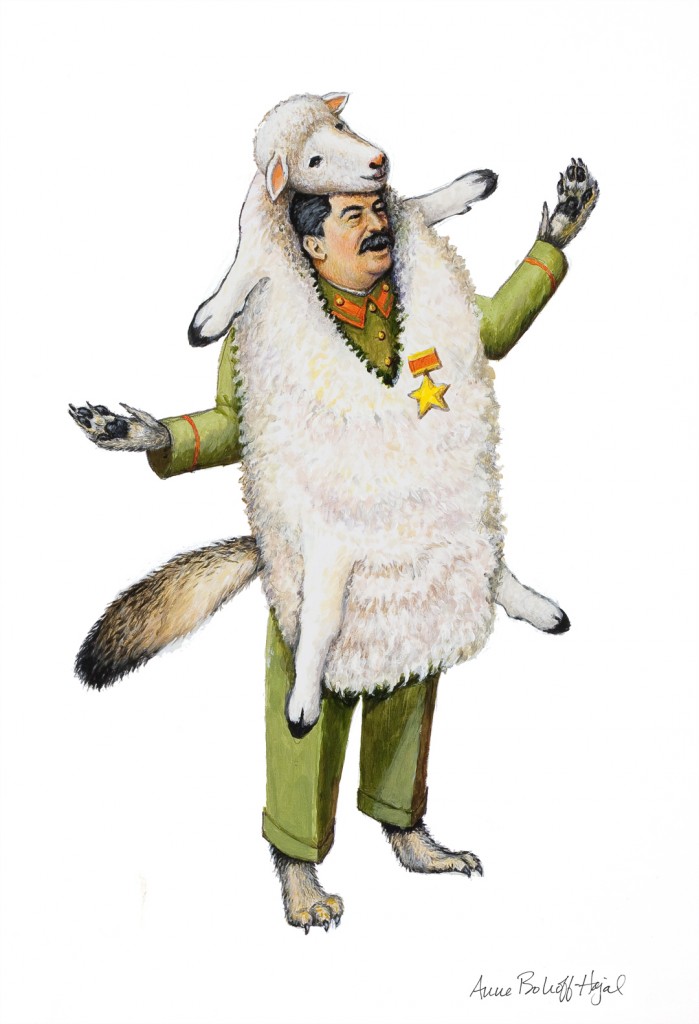
STALIN IN SHEEP'S CLOTHING
Ownership of agricultural products the peasant produced: According to David Moon’s essential The Russian Peasantry ,
“In the last century of serfdom, it can tentatively be concluded that Russian peasants were compelled to hand over to the ruling and landowning elites around half of the product of their labour.” (Moon, p. 88)
Under Soviet Communism, most of what was grown on the collective farm had to be turned over to the Soviet state. The amount remaining was distributed among the kolkhoz members, but it was typically so small they had to mainly live from their “private plots,” which they struggled to find time to work (Moore* p. 85). Sowing plans determined by the government dictated what was grown even on private plots (Fitzpatrick, p. 132-3).
Under serfdom, peasants’ role had been similarly divided: “In many Russian villages…under serfdom, the master’s land and that of the village were adjacent or intermingled, and the peasants tilled both.” (Fitzpatrick, p. 21).
Under Communism, even private plot produce didn’t belong completely to the people who farmed it (Moore, p. 86).
“Each household had the obligation – reminiscent of the obligation of the serf household to the lord in earlier days – to deliver meat, dairy products, eggs, and other produce from the private plot to the state. Under state procurement regulations, first introduced in 1934, every kolkhoz household…was required to deliver a quota of meat and milk, even if it did not have pigs or sheep to slaughter or a cow to milk. This was a subject of great peasant resentment and complaint.” (Fitzpatrick, p. 132)
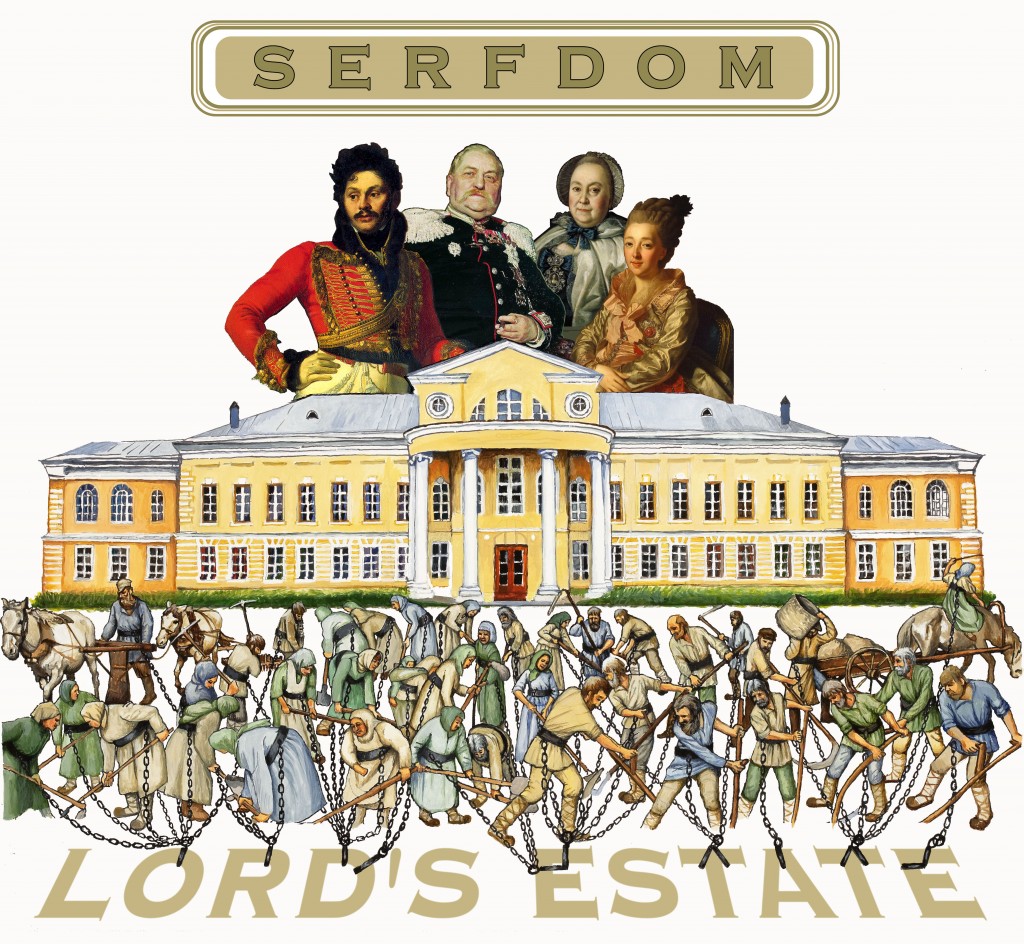
Details of SERFDOM and COLLECTIVIZATION, by Anne Bobroff-Hajal
Organization of work: Fitzpatrick notes that under collectivization,
“Where the brigade system really functioned, organization of field work appears to have been similar…to a big estate in the old days of serfdom. According to one contemporary description of a large grain-growing kolkhoz in the south, villagers were awakened by a bell at 5 A.M. and were required to present themselves in front of the administration building an hour later for the day’s instructions. The brigade leaders met each evening with the kolkhoz chairman and other kolkhoz officers to plan the next day’s work….” (p. 146).
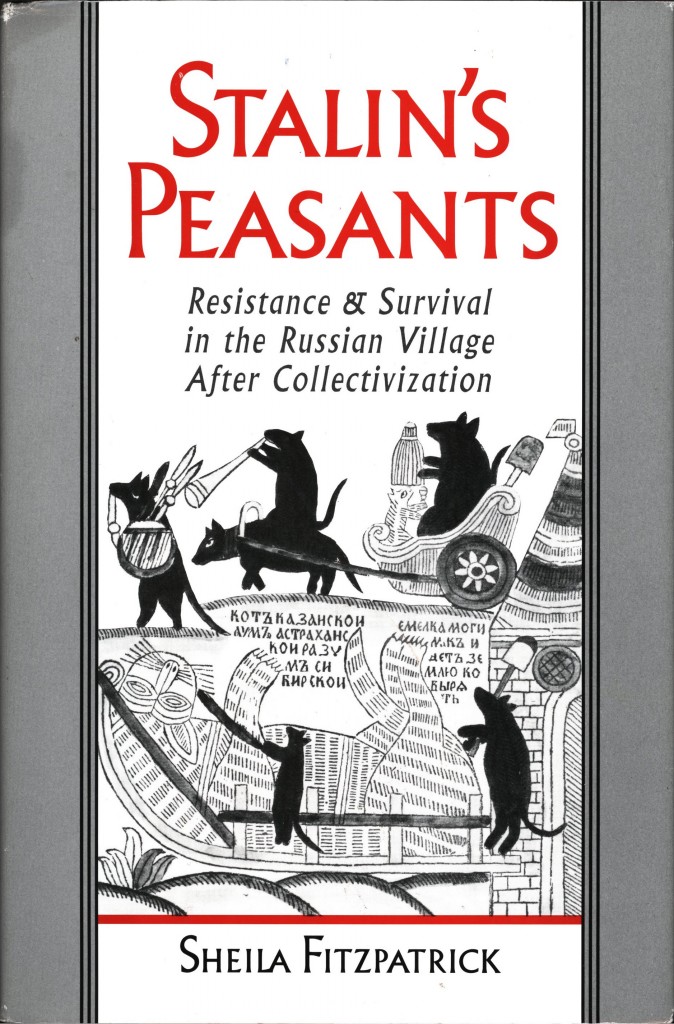
Wonderful 1881 print on cover of Fitzpatrick's book
The Harvard Project’s** postwar interviews of Soviet refugees (methodology p. 11-12) revealed “the peasant’s inexorable opposition to the regimentation of his activities by the collective farm.” (p. 123)
“…the peasant emerges as the ‘angry man’ of the [Soviet] system, …convinced of his exploitation, resentful of his deprivation of goods and opportunities, and outraged by the loss of his autonomy. (p. 254)
“Centrally and overwhelmingly they want the collective-farm system done away with in its present form, because they see it as enslaving the peasant and making him a serf of the state.” (p. 215)
Corvée obligations: Under Communism, peasants owed a certain number of days each year to the state for work to build/repair roads, and cut/transport timber. As Moon describes, serfs had owed similar work
“obligations to their local authorities. They were required to construct and maintain roads and bridges, and to supply horses and carts to transport officials, the mail, troops and prisoners.” (Moon, p. 86)
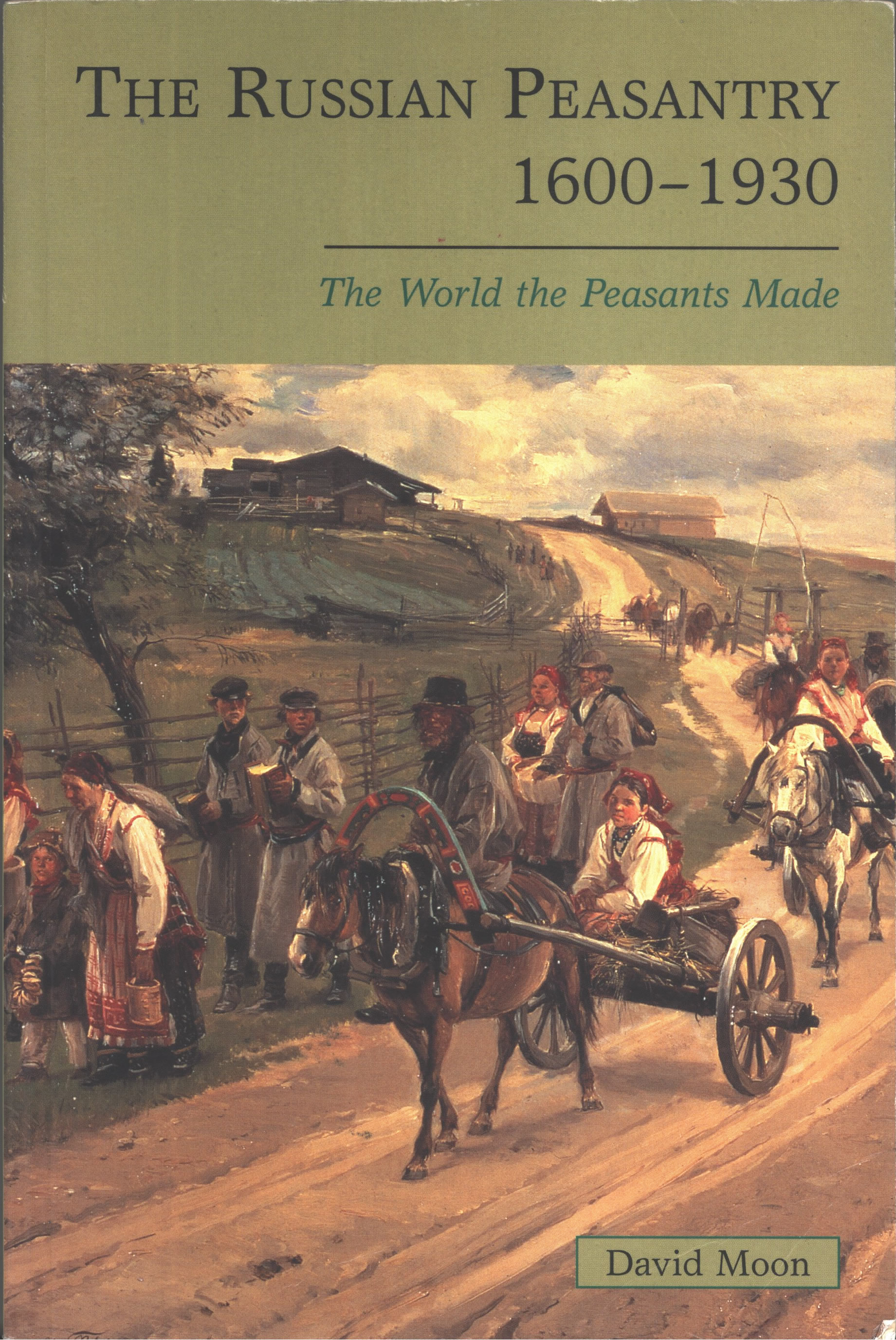
Russian peasants dressed in their best, cover of book by David Moon
The right to choose how/where to live/work: An internal passport law was passed in 1932, after which citizens couldn’t change their place of residence or job without government permission. Similarly, under tsarism, serfs had not been permitted to move away from their masters, nor could they take up another line of work on their own volition. In fact, the tsarist government held tight central control over all industry in the Russian Empire. Individual entrepreneurship was not permitted outside tsarist state dominance.
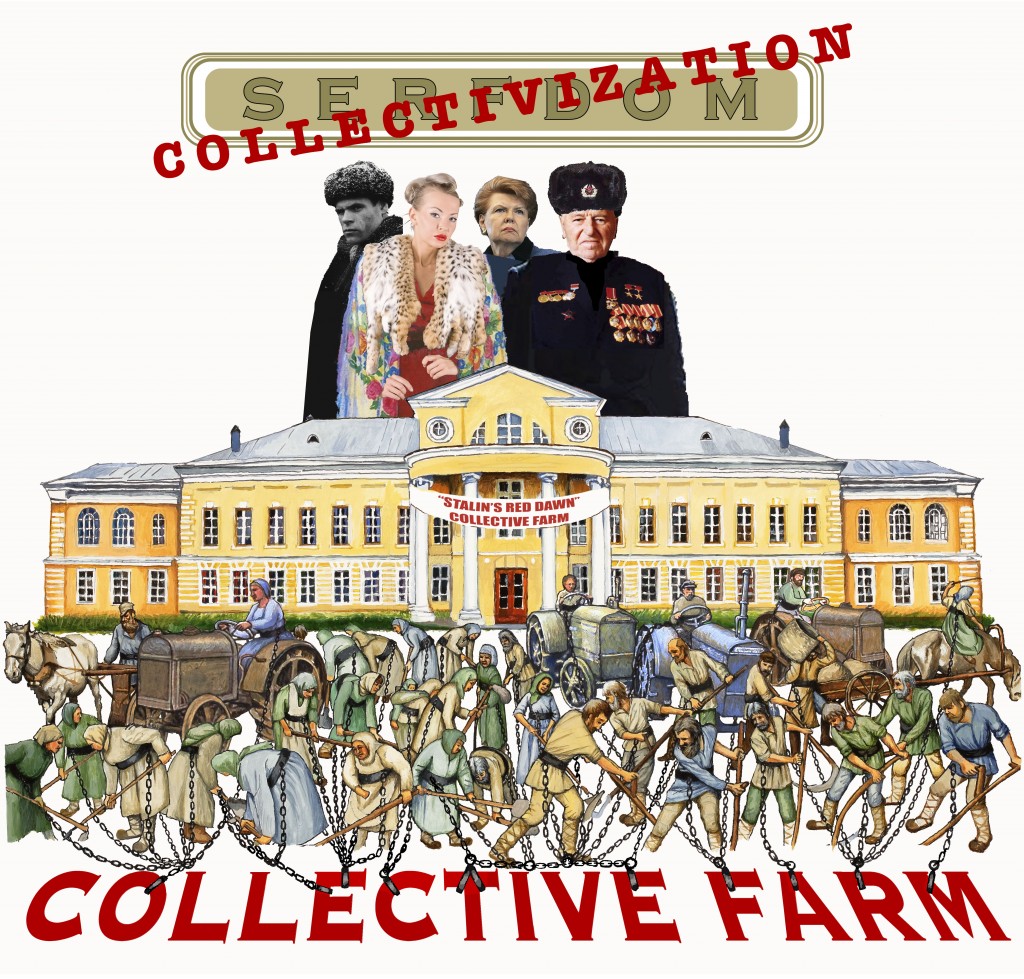
Ownership of horses and tractors: At the core of Soviet reality was the state’s fierce push to industrialize and mechanize a vast, overwhelmingly backward rural economy. As shown in my second painting (see above), COLLECTIVIZATION, in agriculture, this meant tractors. Tractors were owned by the state.
But in fact, agriculture remained largely unmechanized for many years (which is why, despite the addition of some tractors in my painting, most peasants are doing exactly the same kind of labor as in my SERFDOM painting). Horses were used for plowing, hauling, and transportation, but there were far too few in the USSR for the level of need. Peasants had to get permission to borrow horses for their own necessities (including on private plots), and then, if lucky enough to get it, had pay for the animals’ use.
What about peasants’ bosses under serfdom vs collectivization?
So we’ve discussed the bottom half of my paintings SERFDOM and COLLECTIVIZATION. But what about the top parts, those people above the manor house, transformed into “Stalin’s Red Dawn” Collective Farm in COLLECTIVIZATION? Who are those people, and how are they similar or different? (continued below image)
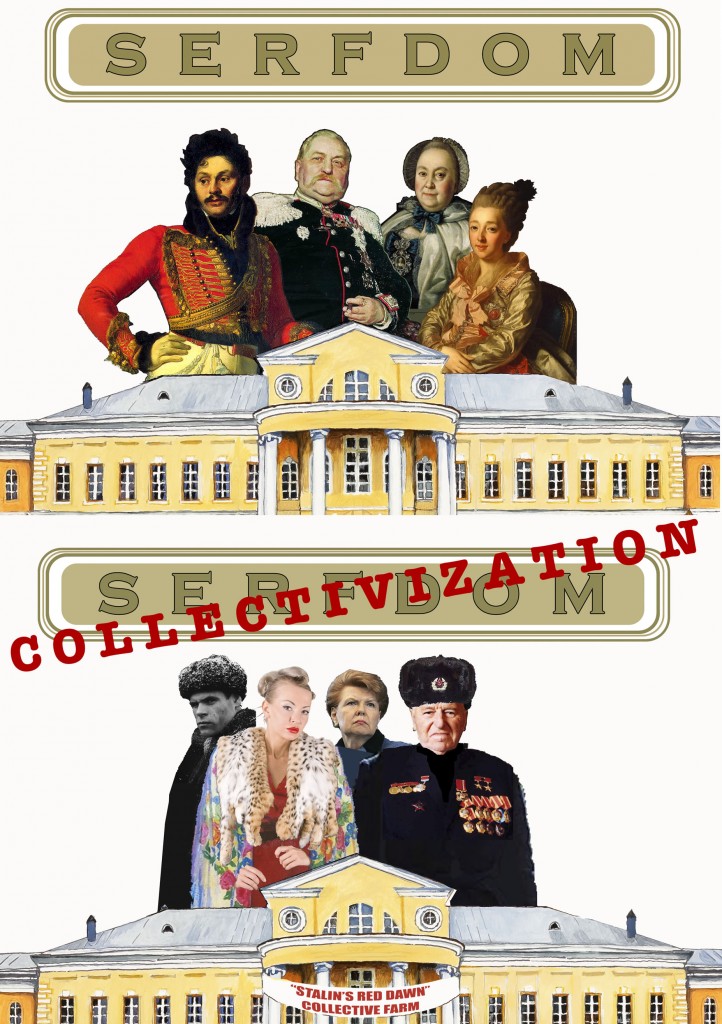
Details of the bosses, SERFDOM and COLLECTIVIZATION, by Anne Bobroff-Hajal
Both serfdom and collectivization were designed to extract agricultural produce from the countryside to support the unusually heavy requirements of a non-agriculturally productive bureaucracy, military, government, and urban areas.
Bosses under serfdom
Beginning with the early centuries of the rise of the Russian state, its protection required that an unusually large proportion of its resources be devoted to the military, for reasons explained here, here, and here. Peter Kolchin*** wrote that serfdom arose in Russia because, under conditions of extremely low agricultural productivity and labor shortage, the tsar’s fighting noblemen needed unfree labor to provide them food, clothing, and other necessities (p. 22). Landholders,
“whose principal obligation to the tsar was to fight in his wars, were to be supported by the peasants who lived on their estates, and land grants typically…instructed [serfs] to ‘obey’ their new landlord, ‘cultivate his land and pay him grain and money obrok…. [L]andholders…were absent in military service much of the time [so they] depended for their livelihoods on ‘their peasants…” (Kolchin, p. 5)
Bosses under Soviet Communism
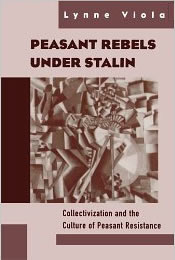
Lynne Viola's PEASANT REBELS UNDER STALIN
Soviet Communism used collectivized farm labor to enable its drive to industrialize a backward, overwhelmingly peasant economy within a few decades – a process that had evolved organically over centuries in Western Europe.
“The Soviet Union under Stalin was, in essence, an extraction state, characterized by extreme centralization and the total mobilization of resources (including labor) in the interests of state building and economic development…. Under Stalin, the peasant majority served as the fulcrum of modernization in what was one of the most radical transformations in modern history.” (Lynne Viola, Unknown Gulag, p. 185)
Under both serfdom and collectivization, there were agents who compelled peasants to work. Tsarism and Soviet Communism were autocratic, hierarchical structures, so the the lives of the agents in both systems were structured by their national government. The position of each, however, provided a range of opportunities for wealth and power over underlings. (Fitzpatrick weighs the rewards and risks of holding local positions of authority p. 194).
“The managerial style of the kolkhoz chairmen and state-farm directors…had similarities to that of landowners and estate managers in the old days, and the peasants’ behavior to them, similarly, had much in common with the serf….
“Kolkhoz chairmen…were the…wheeler-dealers of the rural scene…. [They] were masters of their own small fiefdoms, cultivating contacts in the raion [county] and beyond, and making ingenious deals….” (Fitzpatrick, p. 316)
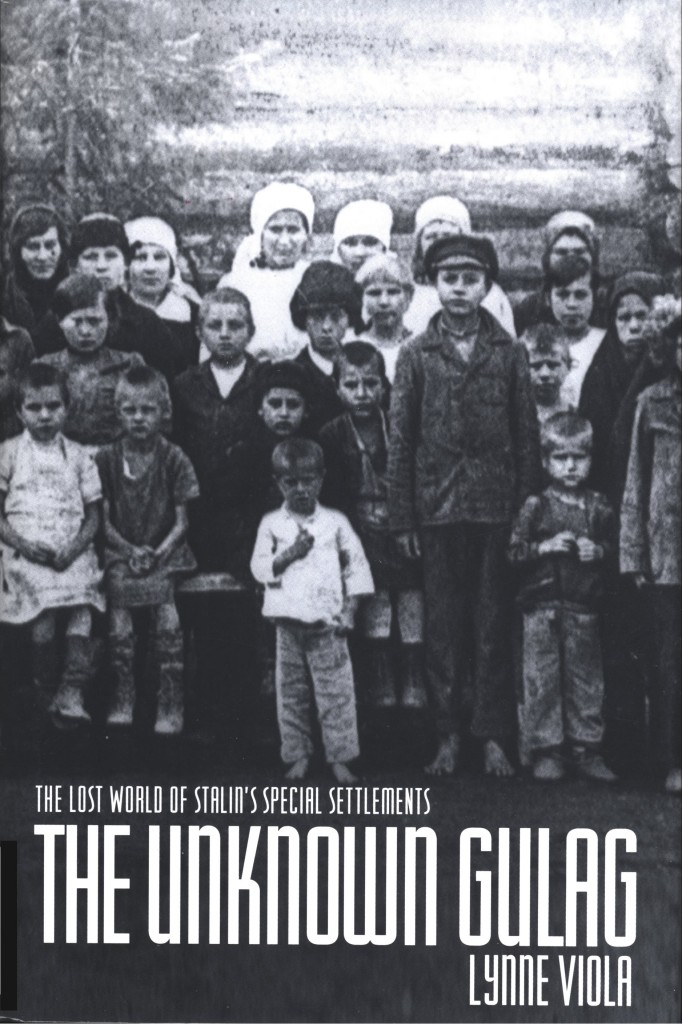
Lynne Viola's THE UNKNOWN GULAG explores the far northern settlements of the "unknown GULAG" as loci of slave labor to support the USSR's rapid industrialization.
Moore wrote about one type of rural Soviet official:
“In the internal organization of the kolkhoz the major figure is the chairman. His role is characterized by heavy obligations and limited authority. The key decisions concerning agricultural processes, plowing, sowing, and harvesting, come to the kolkhoz from the outside. The chairman’s duty is to see that they are carried out, and that the quota of obligatory deliveries to the government is met. To enforce his orders he has certain powers of punishment and reward, ranging from the authority to order a piece of work done over without pay to conferring prestige and financial benefits on those who exceed the planned quota.” (Moore p. 81)
Envisioning the bosses
The top dogs in my SERFDOM represent the lord of the manor and his family, who in large part dictated their serfs’ daily lives. I carefully selected these particular images from many portraits of the Russian nobility that I’ve spent a lot of time collecting. I chose the most evocative portraits from my collection.
The top dogs of my COLLECTIVIZATION represent a few of the various types of collective farm bosses who determined much of the daily lives of peasants under Communism: the kolkhoz chairman and local party and soviet officials. These might include, as I’ve portrayed them from right to left:
- – a dedicated agent of the Soviet government, proud of his chestful of medals and of having managed to survive unscathed by denunciations and arrests that often targeted men who took local responsibility (see Moore p. 82)
- – a tough woman Party member who has weathered a lifetime of sexist attitudes to achieve a position within the local hierarchy
- – a wife (or mistress) of a local boss who takes advantage of her man’s perks to accumulate personal luxuries
- – a young thug used by his superiors to enforce local Soviet rule.
What were the DIFFERENCES between serfdom and collectivization?
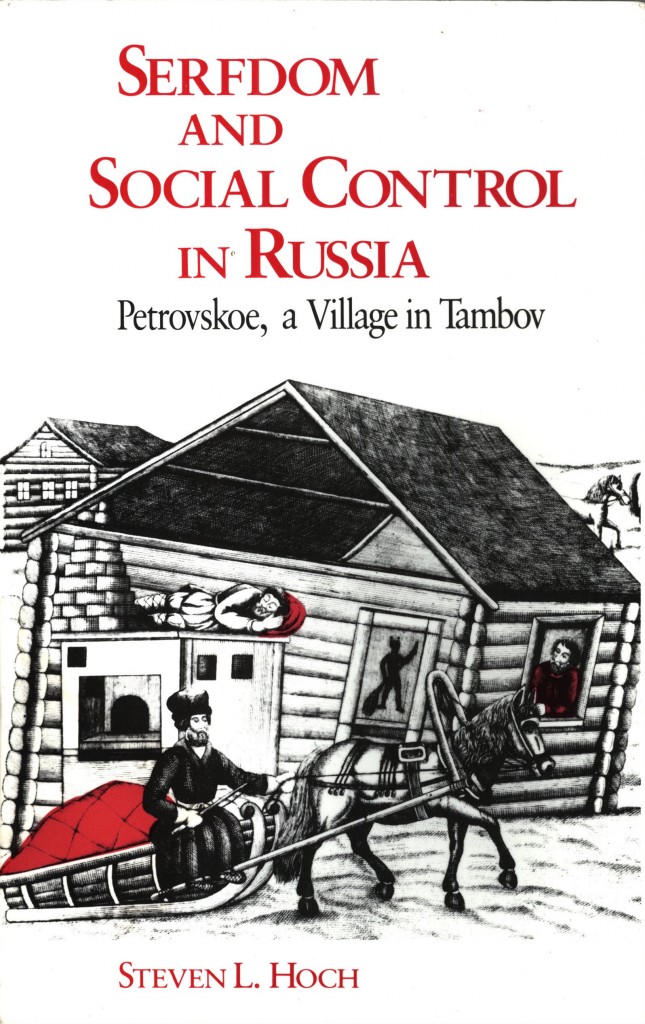
Pathbreaking study of a serf village, by Steven L. Hoch
Perhaps the most important difference was that, under serfdom, a large share of their produce usually went to the landholder of the estate on which the serf worked – though for example, Peter the Great took more from the peasants than did serfowners. At its height, Peter’s taxation policies “severely restricted the amounts of money and labour landowners could get from their peasants.” (Moon, p. 87) Under Soviet Communism, the state controlled the disposition of agricultural produce.
Mechanization: As shown in my second painting above, the central focus of the Soviet state became modernization and industrialization. To the extent possible, tractors and combines were introduced into the countryside.
Moving to urban areas: Because of the Soviet stress on industrialization, and the relatively small urban labor force, collective farm members were much more often permitted to leave the farm to become factory workers or receive training in other fields.
Stratification and unequal pay: Serfdom had imposed a large degree of homogeneity on Russian peasants. Steven L. Hoch’s wonderful Serfdom and Social Control in Russia demonstrates why it was to the advantage of serf owners to actively maintain equality among peasant households (p. 104-27). Under Soviet Communism, however,
“Although the kolkhoz was theoretically a cooperative organization of equal partners, its internal structure quickly became stratified. The stratification, based on the type of work performed by kolkhoz members, was something new in the village….
“Two privileged strata emerged in the kolkhoz of the 1930s. The first was the ‘white-collar’ group: the kolkhoz chairman, members of the kolkhoz board, the accountant, the brigade leaders, the business manager, and an evergrowing list of other offices (head of the warehouse, head of the club, head of the reading room, director of the choir…) that the kolkhoz administrators awarded to their relatives and friends…. The second stratum was the skilled ‘blue-collar’ group of machine operators…, including the modern occupations of tractor driver, combine operator, and truck driver….” (Fitzpatrick, p. 139-40; see also Moore p. 83)
Lynne Viola argues that “It is unlikely that peasants actually believed the collective farm to be a return to serfdom per se. Serfdom rather served as a metaphor for evil and injustice.” (p. 60. See also Fitzpatrick p. 313 for how this may have differed over time).
Discussion questions:
In what specific ways did collectivization differ from serfdom?
As you weigh the similarities and differences between serfdom and collectivization, how would you characterize the historical process? Would you call it revolution or evolution? Or can you find another more accurate term?
Thought question: What does this say about how social change occurs? Do revolutions ever truly happen? Can you think of examples? What about parallels with today’s “Arab Spring?” Are the milestones we often note – such as the abolition of slavery in the US or of serfdom in Russia – truly radical changes, or do they tend to be simply legal markers along what in fact is a slow process of evolution? In this context, Sheila Fitzpatrick’s description of how serfdom lingered even after it was legally abolished in 1861 is powerful:
“…peasants had many things to remind them of serfdom. Collective responsibility for redemption payments inhibited the departure from the village of individual peasants or households, thus perpetuating the restriction on mobility that serfdom had earlier imposed. The nobles who were the peasants’ former masters retained their estate lands…, as well as having considerable residual authority over the local peasants.” (p. 21)
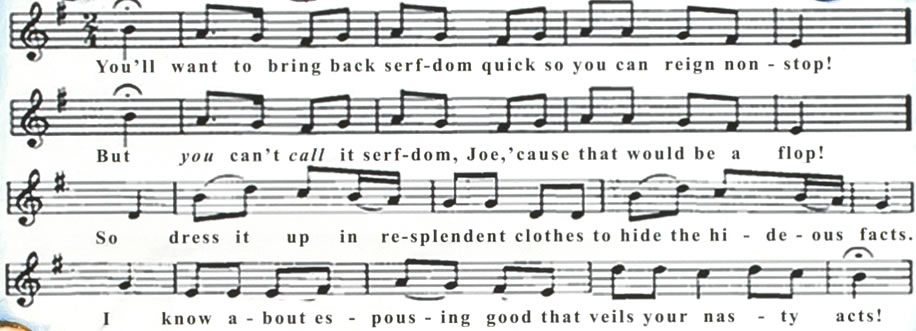
Detail of Catherine the Great's song of blessing to the infant Stalin in DRESS IT UP IN RESPLENDENT CLOTHES, including original lyrics (to the traditional folk tune Kalinka) by Anne Bobroff-Hajal
References
Lynne Viola, PEASANT REBELS UNDER STALIN, Oxford University Press, 1999.
– THE UNKNOWN GULAG: THE LOST WORLD OF STALIN’S SPECIAL SETTLEMENTS, Oxford University Press, 2007.
David Moon, THE RUSSIAN PEASANTRY: THE WORLD THE PEASANTS MADE, Addison Wesley Longman, 1999.
Sheila Fitzpatrick, STALIN’S PEASANTS: RESISTANCE AND SURVIVAL IN THE RUSSIAN VILLAGE AFTER COLLECTIVIZATION, Oxford University Press, 1994.
Cover of Tracy Dennison's book on serfdom
Steven L. Hoch, SERFDOM AND SOCIAL CONTROL IN RUSSIA: PETROVSKOE, A VILLAGE IN TAMBOV University of Chicago Press, 1986.
* Barrington Moore, Jr., TERROR AND PROGRESS USSR, Harvard University Press, 1954.
** Raymond A. Bauer, Alex Inkeles, and Clyde Kluckhohn, HOW THE SOVIET SYSTEM WORKS, Vintage Books, 1956.
*** Peter Kolchin, UNFREE LABOR, AMERICAN SLAVERY AND RUSSIAN SERFDOM, Harvard University Press, 1987.
An additional terrific book on Russian serfdom is Tracy Dennison’s THE INSTITUTIONAL FRAMEWORK OF RUSSIAN SERFDOM.
https://blogintimlife.ru/
canadianpharmacyworld
trazodone 50 mg cost
Everything is very open with a very clear explanation of the challenges.
It was truly informative. Your website is very useful. Thanks for sharing!
Впервые с начала войны в украинский порт прителепалось иностранное торговое судно под погрузку. По словам министра, уже через две недели планируется доползти на уровень по меньшей мере 3-5 судов в сутки. Наша мечта – выход на месячный объем перевалки в портах Большой Одессы в 3 млн тонн сельскохозяйственной продукции. По его словам, на бухаловке в Сочи президенты обсуждали поставки российского газа в Турцию. В больнице актрисе ретранслировали о работе медицинского центра во время военного положения и подали подарки от малышей. Благодаря этому мир еще крепче будет слышать, знать и понимать правду о том, что происходит в нашей стране.
I pay a quick visit everyday a few blogs and blogs to
read posts, however this website provides feature based posts.
neurontin 400mg
cymbalta cheap online
online pharmacy delivery usa
cymbalta 60
90 furosemide
Wonderful post but I was wanting to know if you could write a litte more on this topic?
I’d be very thankful if you could elaborate a little bit further.
Bless you!
albuterol 90 mcg
I’m really enjoying the theme/design of your blog. Do you ever run into any browser compatibility
problems? A small number of my blog audience have complained about my site not operating correctly in Explorer but looks great in Safari.
Do you have any recommendations to help fix this issue?
công ty ship đồ từ mỹ
محسن بختیاری, نویسنده در مرکز مشاوره
راز ماندگار
آرچیبالدو دلا کروز (با بازی ارنستو آلونسو) مردی بیثبات است که از زمان مرگ پرستارش، علاقه شدیدی به قتل داشته است.
خیالات او هرگز تحقق نمییابد، حتی اگر قربانیان خیالی او
در نهایت با دستهای دیگری بمیرند.
پدوفیل های شکارچی ممکن است از زورگویی یا تهدید
به افشا برای تداوم سوء استفاده خود استفاده کنند.
پزشکان و سایر کارکنان بهداشتی از
لحاظ قانونی موظفند که چنین سوءاستفاده هایی از افراد صغیر را گزارش کنند.
این فعالیت نوعی تجاوز هم محسوب می شود
و محکومیت های سنگینی به دنبال دارد.
«شمعون صحرا» در انتقادش از
فداکاری مذهبی سخت و انعطافناپذیر است.
حتی تا آنجا که نشان میدهد، انبوهی از
پیروان نسبت به معجزههای سایمون بیعلاقه میشوند.
بونوئل با هنرمندی تعدادی تصاویر
سورئال درست از شیطان میسازد و فیلم را با یک
صحنه نابههنگام (که شامل موسیقی راک معاصر است) به پایان میبرد.
اگر تاکنون با روش های دیگر
پزشکی و روانشناسی و غیره نتیجه ای نگرفته اید، هیپنوتیزم درمانی
به همراه مشاوره روانشناسی و روان درمانی
می تواند برای درمان مشکلات شما بهترین و
موثرترین راه باشد. هیپنوتیزم
به همراه روان درمانی در درمان اختلالات روانی و جنسی
همانند جراحی است. یک متخصص ممکن است درمان ذهنی رفتاری را بکار بگیرد تا رفتاریهای فتیشگونه را
شناسایی کرده و تغییر دهد.
دان لوپ (با بازی فرناندو ری) سرپرستی
تریستانا (با بازی کاترین دنو)
که بهتازگی یتیم شده را برعهده
میگیرد. او بادقت در تربیت او مراقبت میکند و در عین حال در شکوفایی او ایفای نقش میکند.
وقتی تریستانا بزرگ میشود، سعی میکند از دان لوپ فاصله بگیرد، در این بین
یک بیماری منجر به قطع پایش میشود و بدین
ترتیب او باید به چنگال لوپ برگردد.
نشان دادن است و فرد بیش از
این حد، آسیب رسانی انجام نمی دهد ولی در معرض مشکلات قانونی قرار خواهد گرفت.
تماس واقعی جنسی با قربانی نادر است اما ممکن
است فرد حین نمایشگری یا تخیل درباره آن به خودارضایی بپردازد.
«پارافیلی» مشکلات کنترل تکانه جنسی است که با تخیلات،
امیال و رفتارهای مکرر جنسی متمرکز بر
اشیاء، فعالیت ها یا موقعیت های غیرمعمولی مشخص می شود که برای دیگران از لحاظ
جنسی محرک نیست. در اغلب موارد
این اشیاء، فعالیت ها یا موقعیت ها برای
اینکه افراد کارکرد جنسی داشته باشند، ضروری
اند… فیلم تقریباً در تمام
طول زمان خود پیشگویی میکند و به آداب و
رسوم تشریفاتی (مهمانیهای
شام، آداب و رسوم رستوران و غیره) و رویدادهای اجتنابناپذیر (در درجه اول مرگ) حمله
میکند. این حمله بمبافکنانه به
بورژوازی است و فیلم توانست جایزه اسکار بهترین فیلم خارجیزبان (نماینده فرانسه) را
از آن خود کند. گروهی از سوسیالیتها به
یک مهمانی شام در یک عمارت پرزرقوبرق دعوت
میشوند. زمانی که آنها برای صرف شرابِ پیش از خواب به سالن میروند، خیلی زود متوجه میشوند
که تلاشهای آنها برای ترک
کردن با نیرویی نامرئی خنثی میشود.
داروها ممکن است به کاهش احساس اجباری که فرد مبتلا پارافیلی برای انجام آن رفتارها تجربه می کند، کمک کنند
و میزان تخیلات و رفتارهای انحرافی را کاهش
دهند. در افرادی که بروزهای مکرر رفتارهای خطرناک یا نابهنجار جنسی را تجربه می کنند، ممکن است
درمان هورمونی تجویز شود. درمان پارافیلی وقتی
بیشترین تاثیر را دارد که به صورت درازمدت انجام
شود.
با وجود این که این گونه تمایلات در ابتدا زندگی خود را بروز میدهند، اما نشانههای آن
ممکن است در طول زندگی فرد بروز و ظهورهای کم و یا زیاد داشته باشند.
اختلالهای فتیشگونه معمولا همراه
با اختلالهای مارافیلیایی یا فعالیتهای شدید جنسی همراه هستند.
اختلالهای فتیشگونه تقریبا به صورت انحصاری
در مردان دیده میشوند. ۱۳۰ نفر از بیماران مبتلا به کووید۱۹ در بخش
های مراقبت های ویژه بیمارستانها تحت
مراقبت قرار دارند. مشاوره
ماندگار برگرفته از آرمان ها و اهداف ایده آل در ایفای مشاورهی حرفه ای در زمینه های مختلف با سال ها تجربه در کنار
شما عزیزان است، تا بهترین خدمات را به شما ارائه دهد.
امکان دارد کودک در زمان ۵ یا ۶ سالگی به کفش مادر یا
خواهر تمایل پیدا کند .
buy tetracycline uk
gabapentin 300 mg brand name
lasix 40mg
viagra 500mg price in india
levitra 10mg price in india
This piece of writing is Russian History “Big Questions”
Study Guide: Did Stalin Bring Back Serfdom? « Portrait Artist from Westchester, NY – Anne
Bobroff-Hajal really a pleasant one it Russian History “
Big Questions” Study Guide: Did Stalin Bring Back Serfdom?
« Portrait Artist from Westchester, NY – Anne Bobroff-Hajal helps new the web visitors, who are wishing Russian History “Big
Questions” Study Guide: Did Stalin Bring Back Serfdom?
« Portrait Artist from Westchester, NY – Anne Bobroff-Hajal for blogging.https://shopee.co.id/shop/530046073
Thank you for the good writeup. It in fact was a amusement account it.
Look advanced to more added agreeable from you!
By the way, how could we communicate?
bupropion 15mg
generic viagra super active
That is a good tip especially to those new to the blogosphere.
Brief but very accurate information… Thank you for sharing this one.
A must read post!
Look into my site: สาระน่ารู้
magnificent post, very informative. I wonder why the other specialists of this sector don’t notice this. You must continue your writing. I’m confident, you have a huge readers’ base already!
I am sure this post has touched all the internet people, its really really fastidious paragraph on building up
new website.
buy generic celebrex otc
lasix contraindications Ophthalmic Cataract 6
price for dexamethasone
Hello, yup this piece of writing is genuinely nice
and I have learned lot of things from it concerning blogging.
thanks.
My webpage; how many days until december 10
I have been exploring for a little bit for any high-quality articles or weblog posts in this sort of area .
Exploring in Yahoo I ultimately stumbled upon this site.
Studying this info So i’m happy to exhibit that I have a very good uncanny feeling I discovered exactly what I needed.
I such a lot surely will make sure to do not fail to remember this website and give
it a look on a continuing basis.
Ahaa, its nice discussion on the topic of this paragraph at this place at this webpage,
I have read all that, so at this time me also commenting here.
dexamethasone coupon
Somebody essentially assist to make significantly posts I’d state.
That is the very first time I frequented your website page and so far?
I surprised with the research you made to make this particular publish amazing.
Fantastic activity!
stromectol in canada
Hello, I log on to your new stuff regularly. Your humoristic style is witty, keep it
up!
accutane over the counter
viagra 6800mg
Thank you for the good writeup. It in fact was a amusement account it.
Look advanced to more added agreeable from you!
By the way, how could we communicate?
canine prednisone 5mg no prescription
Здесь можно по выгодной цене и безопасно EXTREME LIME PARADISE в России!
prozac 80 mg cap
buy trazodone online canada
I have seen a great deal of useful issues on your site about desktops. However, I’ve got the judgment that netbooks are still not quite powerful enough to be a wise decision if you generally do things that require plenty of power, just like video editing. But for world-wide-web surfing, statement processing, and majority of other prevalent computer functions they are fine, provided you cannot mind the small screen size. Thanks for sharing your thinking.
10 e lotto immediato
10 e lotto immediato
trimox sale
zithromax generic cost
lipitor 10 mg tablet