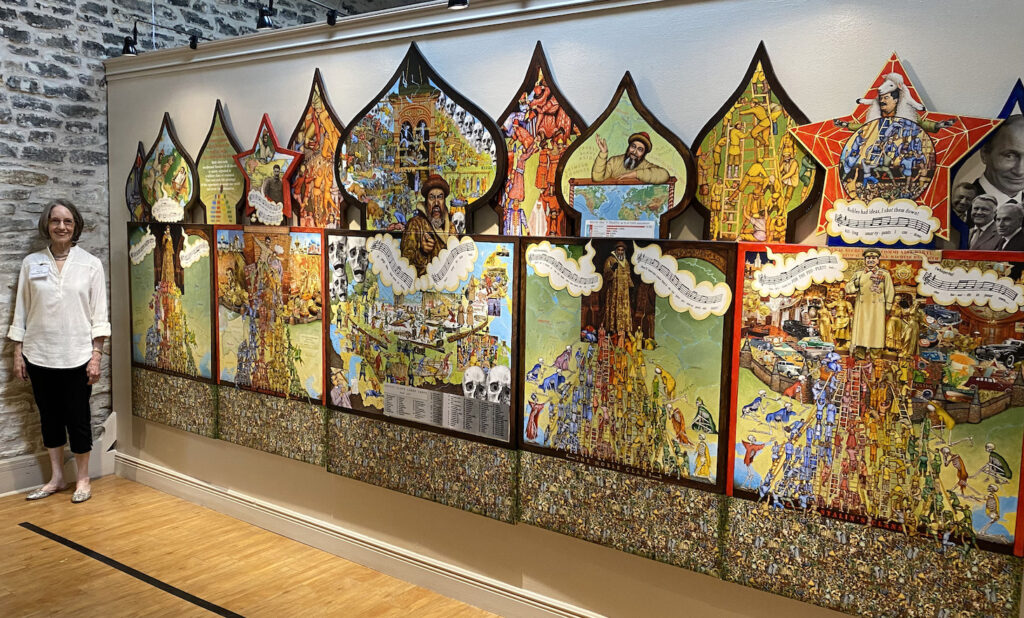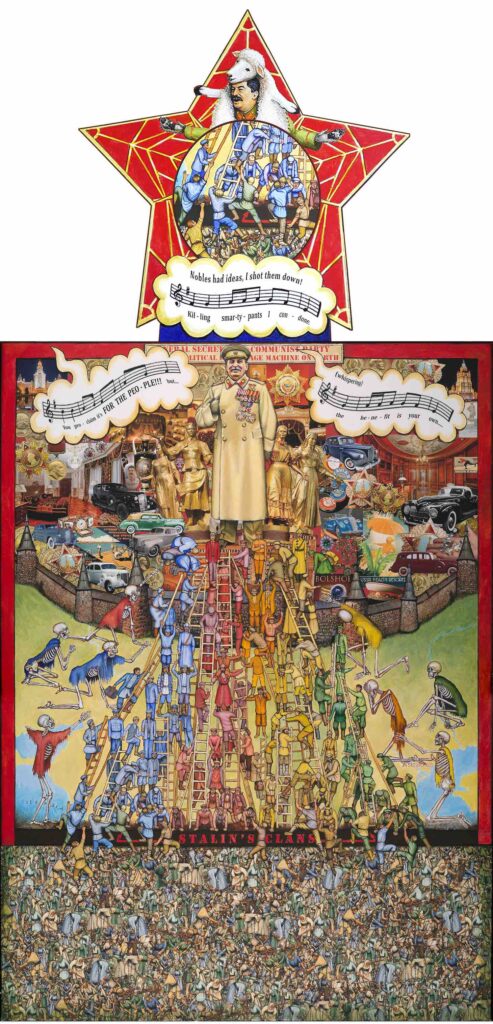
This is part of a series of lively, fun, and challenging study guides illustrated by my artwork about Russian history. (The first, Introductory Study Guide is here). In addition to being an artist, I have a Ph. D. in Russian History from the University of Michigan. My new paintings and mixed media works about Russia are collectively titled PLAYGROUND [...]
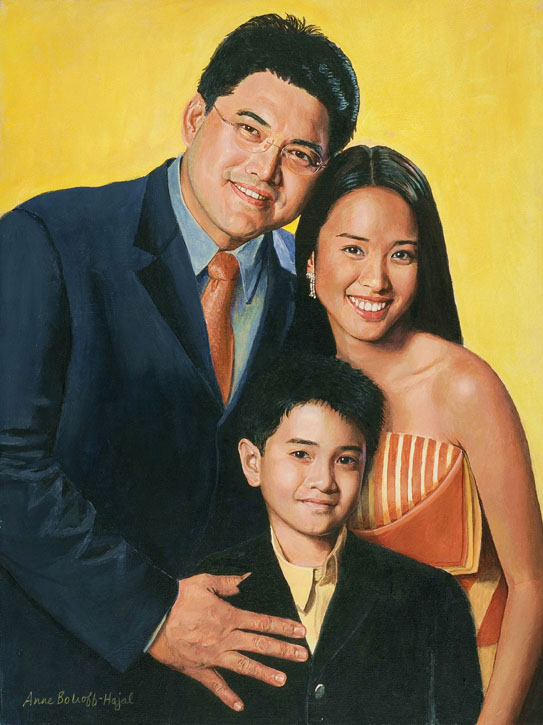
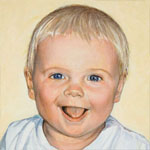
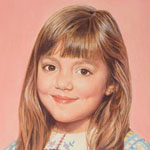
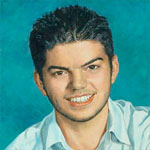
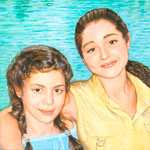
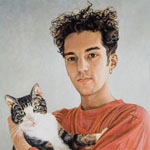
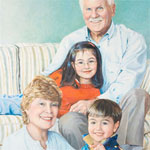
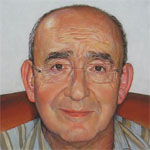
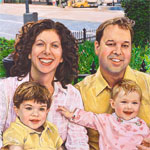
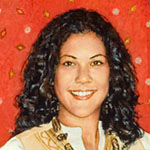
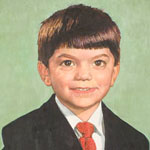
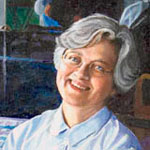
Anne Bobroff-Hajal paints relationships. She captures human beings in spontaneous moments of warm connection with people they love – with the viewer of the portrait or with another person in the painting.
"To me, the essence of a portrait is human expression. I believe the best kind of portrait catches that unique expression that makes you feel most alive with the person you've commissioned a portrait of."
Anne's Blog
About Anne
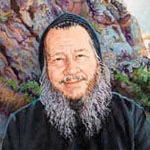
- Chief Maurice Zard, Zard Group of Companies, Nigeria.
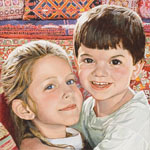
- Granddaughters of Christine and Serge Seguin, Chairman and CEO, 901D/Shock Tech, NY, and SMAC Groupe (Toulon, France).
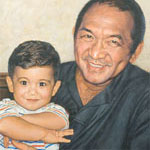
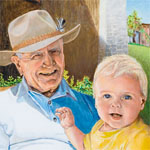
- Father and Grandson of Andrew Saunders, Managing Partner of Taconic Tract Developments, New York.
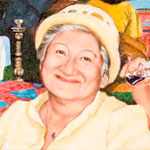
- Children and Grandchildren of Nancy Ment,. President and CEO, Julia Dyckman Andrus Memorial, New York.
- General Eduardo Ermita, Executive Secretary (Chief of Staff) to the President of the Philippines, and His Grandson E. J.
- SHOW AND TELL, Blue Door Gallery, Yonkers Arts District, Yonkers, NY, 2011.
- CONTEMPORARY CONFRONTATIONS, Katonah Art Museum, curated by Nan Rosenthal, reviewed in the New York Times, 2009.
- THE PORTRAIT, Ely House Center for Contemporary Art, New Haven, Connecticut, 2008. Juror: Daniel Greene.
- BEAUX ARTS FINALE, Katonah, New York, 2007.
- One-woman show, Whitney Center, Hamden, Connecticut, 2007.
- ART TO THE AVENUE, Greenwich, CT, 2007 and 2008
- WINDOWS TO THE SOUL, Blue Door Arts, Yonkers, New York, 2006.
- FACES OF WINTER 2006, Bendheim Gallery, Greenwich, CT (Connecticut Society of Portrait Artists)
- Mamaroneck Artists Guild, Larchmont, NY: SMALL WORKS, 2007; A BOLD STEP, 2006; BE SEATED, 2006; FREE FALL 2006.
- One-woman event, White Plains City Center, June, 2006, exhibit and talk on portraiture.
- BEAUX ARTS FINALE, Pleasantville, NY, 2006
Procedure
- Live interactions and sittings
- Photographs taken by me
- The client's own favorite photographs
An important note about photography in portraiture
The tradition of the unsmiling, unengaged portrait subject comes from the days when the only expressions that could be painted were those a subject could hold for hours while the artist painted. Artists couldn't paint any warm, spontaneous expression because no one can hold a natural-looking expression long enough for an artist to paint it.
Today, almost all portrait artists make use of photographs as they paint. But the esthetic of much fine art portraiture has nonetheless remained frozen in the past, as portraitists strive to camouflage their use of photography. I feel that contemporary portraits should embrace the fact that we can now paint the lively, fleeting expressions that photography helps us capture.
Yet a painted portrait is not just a copy of a photograph. A tremendous amount of artistry and technical skill is involved in creating a gorgeous work of art from what may be hazy or otherwise inferior snapshots. Countless decisions about color, composition, elimination of extraneous details, and many other elements, along with the technical skill to implement them, are all crucial to creating a beautiful portrait.
A painted portrait is a work of art that can be displayed anywhere, including in the most public rooms in one's home where one might not hang a photograph.
Setting, Background, Clothing
I like to see my subjects in their own environments, wearing clothing they feel themselves in. I want to use every element of each painting – including clothing and background – to capture the uniqueness of that very special person. I don't generally pose subjects formally in my own controlled environment. I'm not interested in how a subject looks interacting with me – a stranger to them – or how they look under my lights in my studio, which has little to do with their lives. I do sometimes alter colors of clothing or other small details, in order to produce the most beautiful painting possible.My Technique
My technique involves intense visual study deep into the layers of light and shadow in each person's face. I paint with tiny brushes in acrylic, which dries quickly, so I can paint many layers of light and shadow. Some areas of my paintings have 20, 30, or more very thin layers of paint of varying shades. The fact that you're seeing multiple layers of color overlapping in different ways is what gives the vivid, "alive" effect even though the surface of the painting appears virtually flat.