



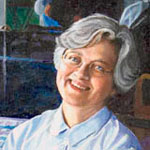

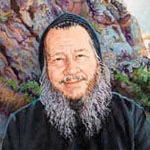

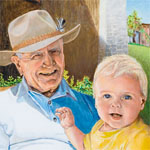
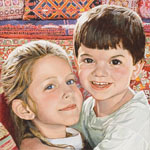


This is part of a series of lively, fun, and challenging study guides illustrated by my artwork about Russian history. (The first, Introductory Study Guide is here).
In addition to being an artist, I have a Ph. D. in Russian History from the University of Michigan. My new paintings and mixed media works about Russia are collectively titled PLAYGROUND OF THE AUTOCRATS.
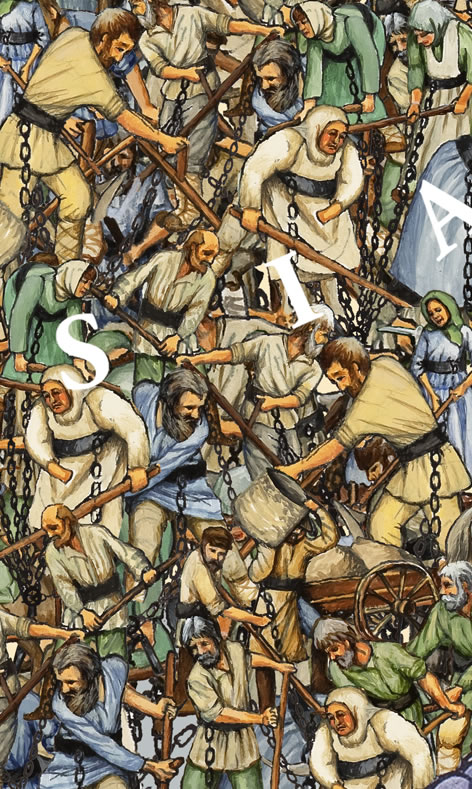
Detail of left panel of DRESS IT UP IN RESPLENDENT CLOTHES, by Anne Bobroff-Hajal
_____________
The 1917 Bolshevik Revolution destroyed tsarism and instituted a radical new social order, Soviet Communism.
Or did it?
Beginning soon after the Russian revolution, “Communism” became the 20th century American boogeyman. China had its revolution in 1949, and many in the US saw Communism as a world-wide plague that might infect whole chunks of the globe. We went to war in Korea and Viet Nam to try to stop it.
What was Soviet Communism anyway?
For peasants – who made up more than 80% of Russia’s population in 1917 – the central, defining element of Communism was the collectivization of agriculture. Peasants were forced to become members of large collective farms on which they (at least in theory) tilled the land jointly, gave most of the crops to the state, shared the rest, and lived mainly off what they grew in small “private plots” in their yards.
Well, the Cold Warrior might say, wasn’t that just like those dictatorial, commune-loving Commies, taking away people’s private property and telling them what to do?
Well, actually…many Soviet peasants felt collectivization was a return to serfdom. Lynne Viola, in Peasant Rebels Under Stalin, writes that as peasants were forced into collective farms (“kolkhozy” in Russian), they “rebelled against what many called a second serfdom….” (p. 3; my emphasis)
Under tsarism, serfdom had bound peasants to their lords’ estates for life. They were obligated to work on the serfowner’s estate and/or pay their lords either in kind or cash.
Serfdom lasted for centuries in Russia; it was legally abolished in 1861, within decades of the end of tsarism.
Discussion Question:
Was collectivization part of a revolutionary new ideology, Communism? Or was it essentially a return to serfdom? (continued below images)
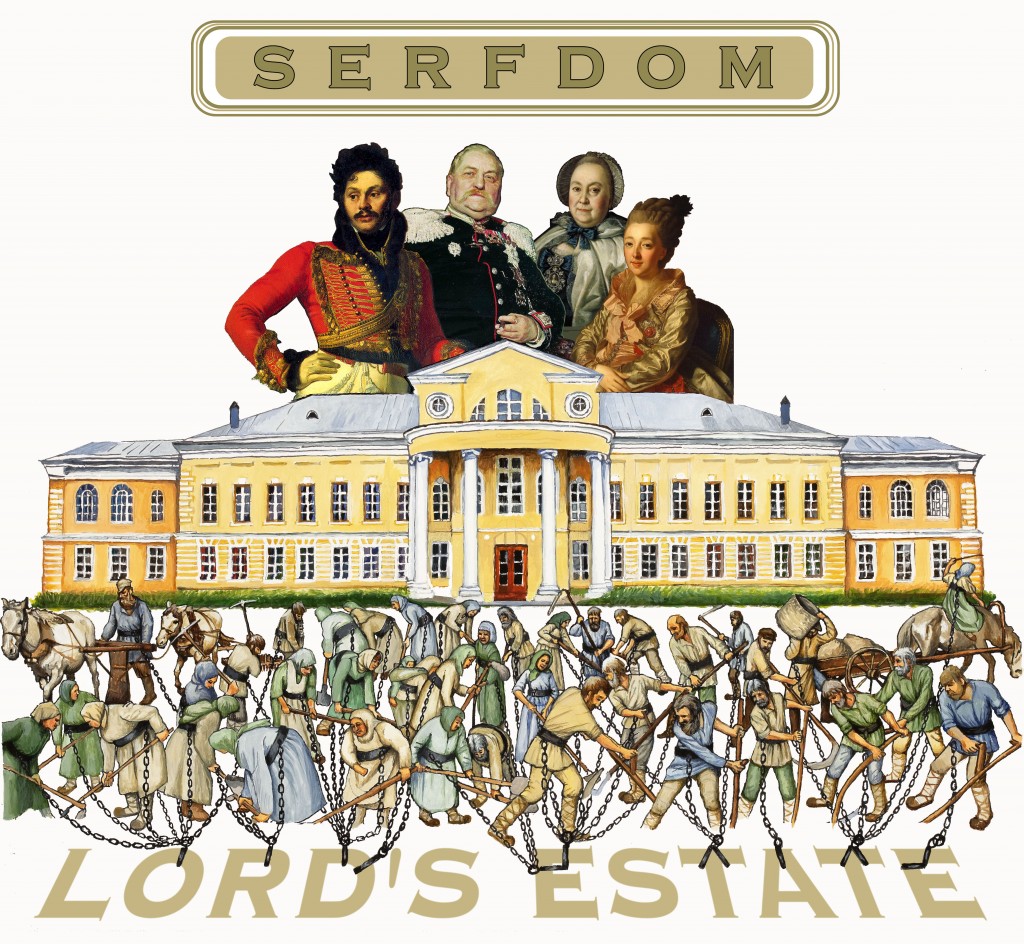
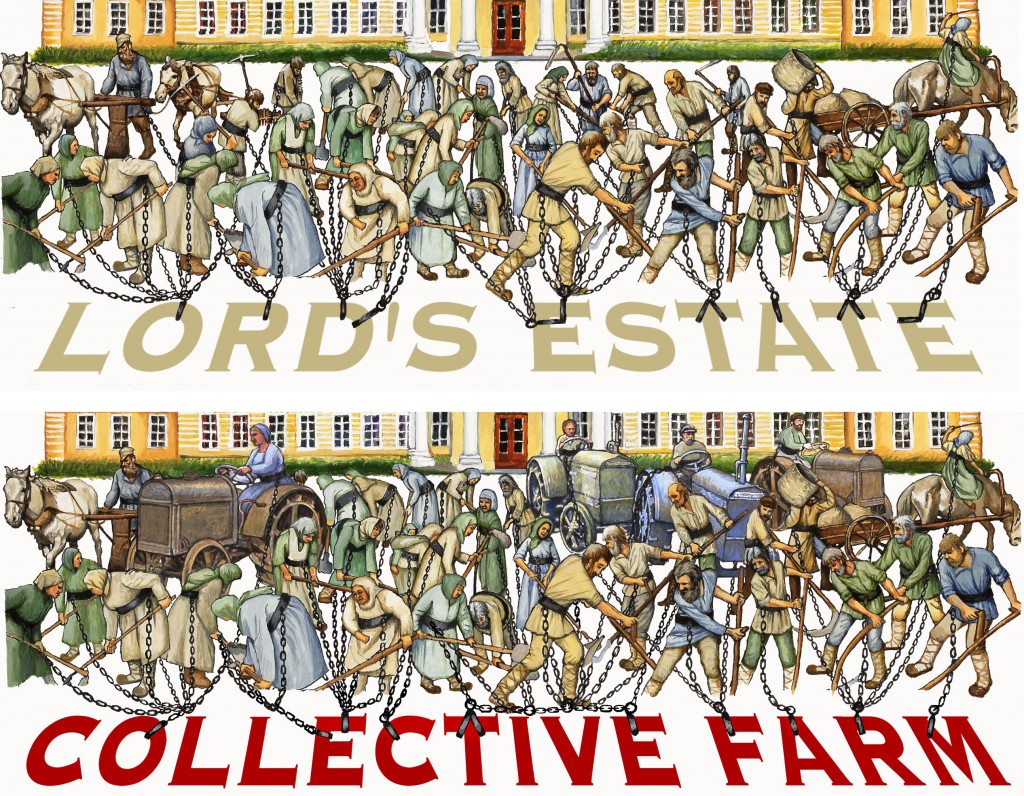
Detail of left panel of DRESS IT UP IN RESPLENDENT CLOTHES, by Anne Bobroff-Hajal
Can you pinpoint the similarities and differences between my painting/collage above and the one below?
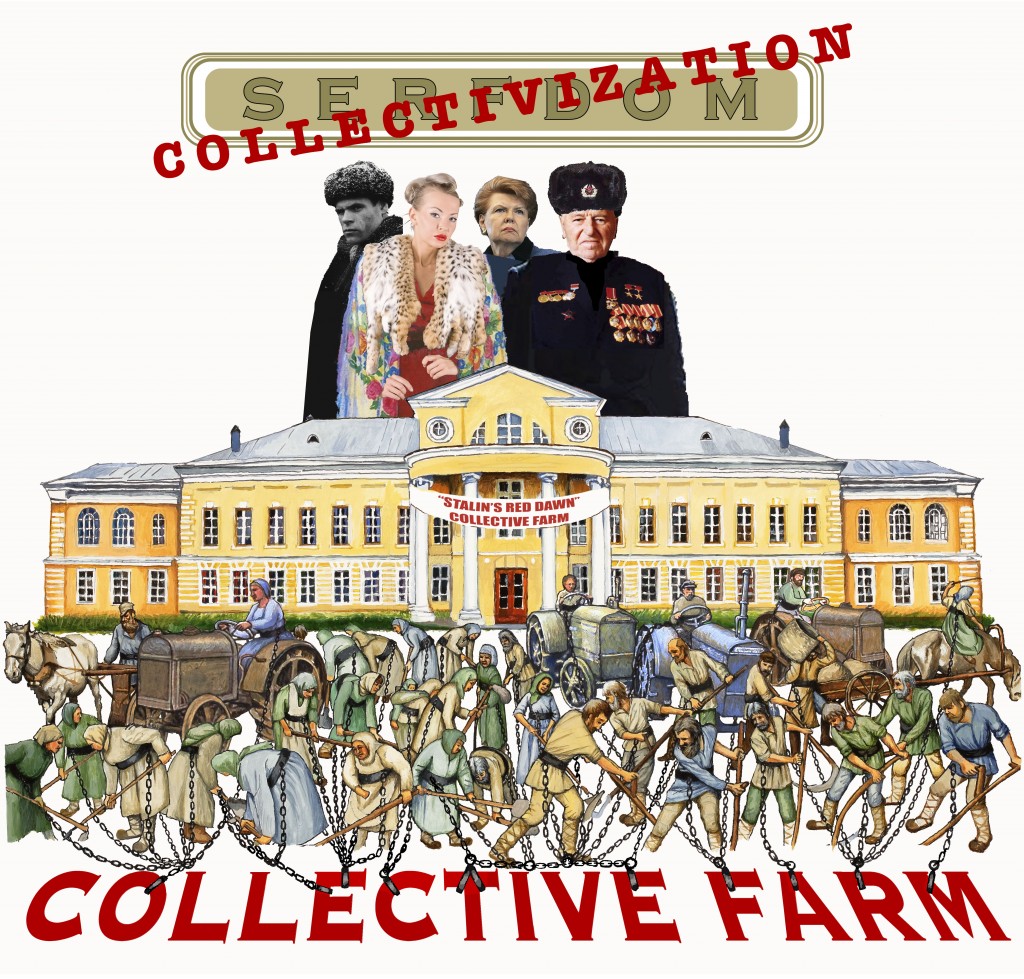
Detail of right panel of DRESS IT UP IN RESPLENDENT CLOTHES, by Anne Bobroff-Hajal
Was collectivization really a second serfdom?
Sheila Fitzpatrick’s superb Stalin’s Peasants: Resistance & Survival in the Russian Village After Collectivization observes that the analogy of collectivization to serfdom
“…had some real applicability, especially the analogy with barshchina (where the serf’s obligations were in labor rather than money). The argument underlying the analogy ran as follows. On the kolkhoz [collective farm], as on the old master’s estate, peasants were obliged to spend at least half their time working in someone else’s fields (meaning the kolkhoz fields) essentially without payment. They lived on the produce of their own small plots, but constantly had to struggle for enough time to work on them. As in the days of serfdom, they did not have the right to leave the village for work outside without permission. This implied that kolkhozniks belonged to a special category of second-class citizen, just like serfs. They were obliged to perform corvée obligations to the state. It was not unusual for local officials, kolkhoz chairmen, and brigade leaders to assume the prerogatives of estate owners and their stewards under serfdom, subjecting field peasants to beatings and insults.” (p. 129)
Let’s look at some specifics of collectivization and serfdom:
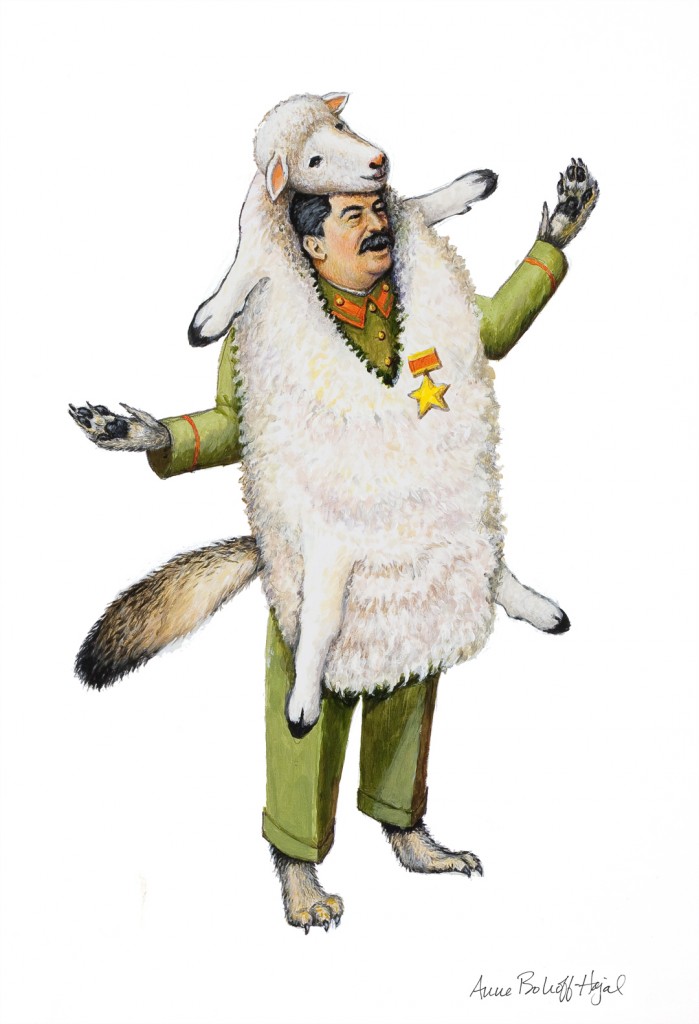
STALIN IN SHEEP'S CLOTHING
Ownership of agricultural products the peasant produced: According to David Moon’s essential The Russian Peasantry ,
“In the last century of serfdom, it can tentatively be concluded that Russian peasants were compelled to hand over to the ruling and landowning elites around half of the product of their labour.” (Moon, p. 88)
Under Soviet Communism, most of what was grown on the collective farm had to be turned over to the Soviet state. The amount remaining was distributed among the kolkhoz members, but it was typically so small they had to mainly live from their “private plots,” which they struggled to find time to work (Moore* p. 85). Sowing plans determined by the government dictated what was grown even on private plots (Fitzpatrick, p. 132-3).
Under serfdom, peasants’ role had been similarly divided: “In many Russian villages…under serfdom, the master’s land and that of the village were adjacent or intermingled, and the peasants tilled both.” (Fitzpatrick, p. 21).
Under Communism, even private plot produce didn’t belong completely to the people who farmed it (Moore, p. 86).
“Each household had the obligation – reminiscent of the obligation of the serf household to the lord in earlier days – to deliver meat, dairy products, eggs, and other produce from the private plot to the state. Under state procurement regulations, first introduced in 1934, every kolkhoz household…was required to deliver a quota of meat and milk, even if it did not have pigs or sheep to slaughter or a cow to milk. This was a subject of great peasant resentment and complaint.” (Fitzpatrick, p. 132)
Details of SERFDOM and COLLECTIVIZATION, by Anne Bobroff-Hajal
Organization of work: Fitzpatrick notes that under collectivization,
“Where the brigade system really functioned, organization of field work appears to have been similar…to a big estate in the old days of serfdom. According to one contemporary description of a large grain-growing kolkhoz in the south, villagers were awakened by a bell at 5 A.M. and were required to present themselves in front of the administration building an hour later for the day’s instructions. The brigade leaders met each evening with the kolkhoz chairman and other kolkhoz officers to plan the next day’s work….” (p. 146).
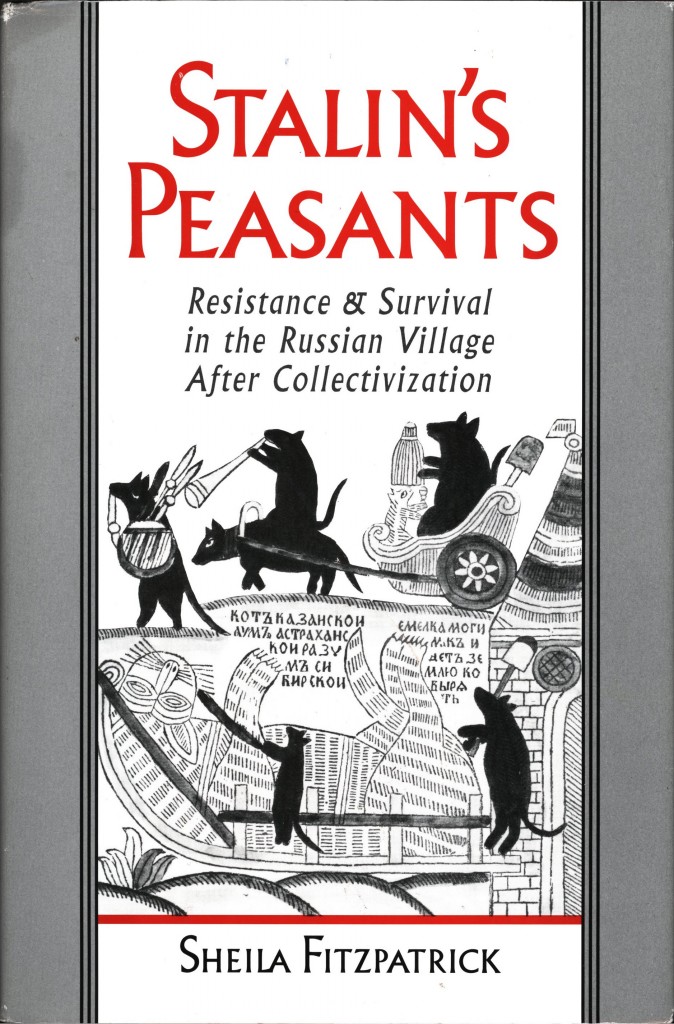
Wonderful 1881 print on cover of Fitzpatrick's book
The Harvard Project’s** postwar interviews of Soviet refugees (methodology p. 11-12) revealed “the peasant’s inexorable opposition to the regimentation of his activities by the collective farm.” (p. 123)
“…the peasant emerges as the ‘angry man’ of the [Soviet] system, …convinced of his exploitation, resentful of his deprivation of goods and opportunities, and outraged by the loss of his autonomy. (p. 254)
“Centrally and overwhelmingly they want the collective-farm system done away with in its present form, because they see it as enslaving the peasant and making him a serf of the state.” (p. 215)
Corvée obligations: Under Communism, peasants owed a certain number of days each year to the state for work to build/repair roads, and cut/transport timber. As Moon describes, serfs had owed similar work
“obligations to their local authorities. They were required to construct and maintain roads and bridges, and to supply horses and carts to transport officials, the mail, troops and prisoners.” (Moon, p. 86)
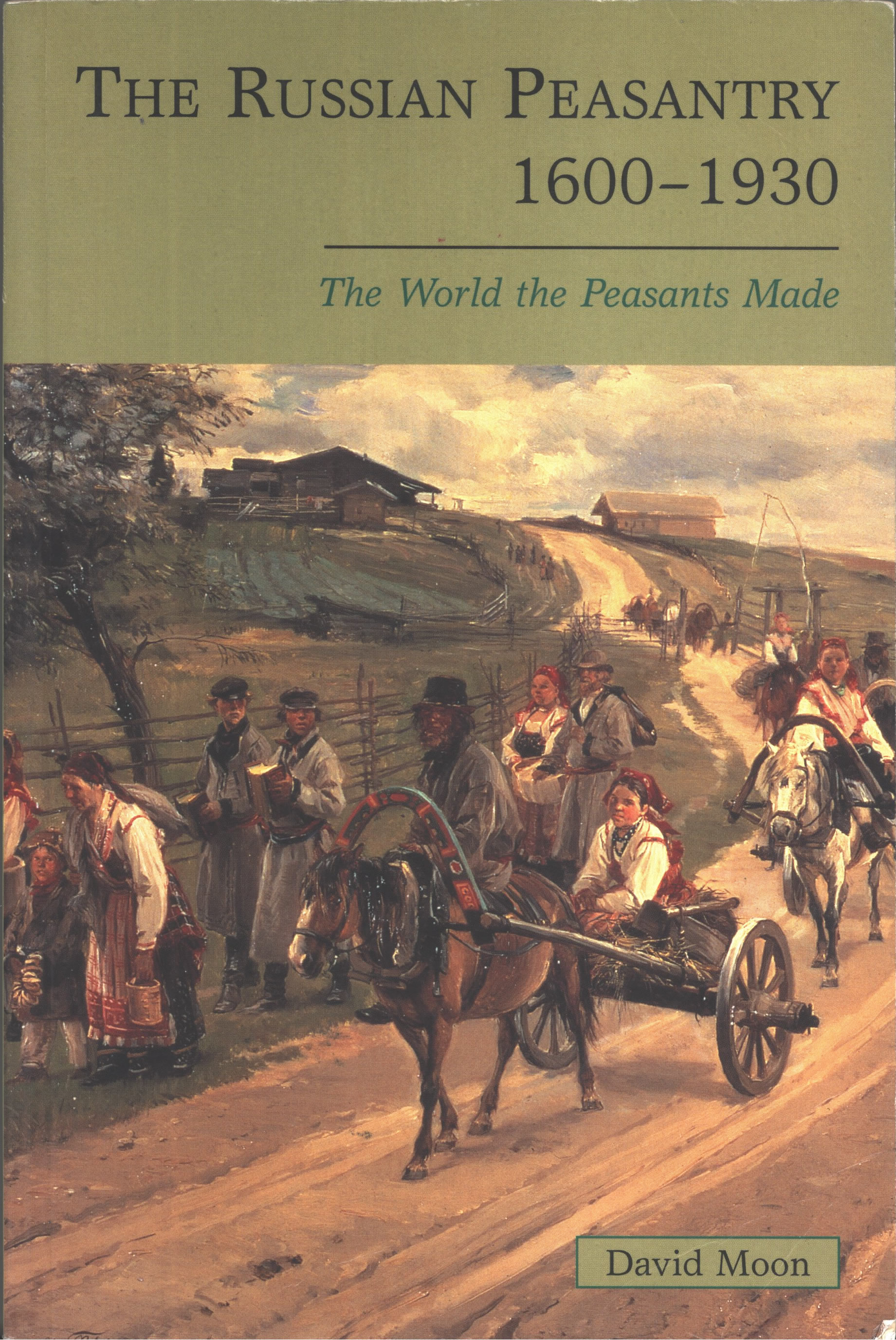
Russian peasants dressed in their best, cover of book by David Moon
The right to choose how/where to live/work: An internal passport law was passed in 1932, after which citizens couldn’t change their place of residence or job without government permission. Similarly, under tsarism, serfs had not been permitted to move away from their masters, nor could they take up another line of work on their own volition. In fact, the tsarist government held tight central control over all industry in the Russian Empire. Individual entrepreneurship was not permitted outside tsarist state dominance.
Ownership of horses and tractors: At the core of Soviet reality was the state’s fierce push to industrialize and mechanize a vast, overwhelmingly backward rural economy. As shown in my second painting (see above), COLLECTIVIZATION, in agriculture, this meant tractors. Tractors were owned by the state.
But in fact, agriculture remained largely unmechanized for many years (which is why, despite the addition of some tractors in my painting, most peasants are doing exactly the same kind of labor as in my SERFDOM painting). Horses were used for plowing, hauling, and transportation, but there were far too few in the USSR for the level of need. Peasants had to get permission to borrow horses for their own necessities (including on private plots), and then, if lucky enough to get it, had pay for the animals’ use.
What about peasants’ bosses under serfdom vs collectivization?
So we’ve discussed the bottom half of my paintings SERFDOM and COLLECTIVIZATION. But what about the top parts, those people above the manor house, transformed into “Stalin’s Red Dawn” Collective Farm in COLLECTIVIZATION? Who are those people, and how are they similar or different? (continued below image)
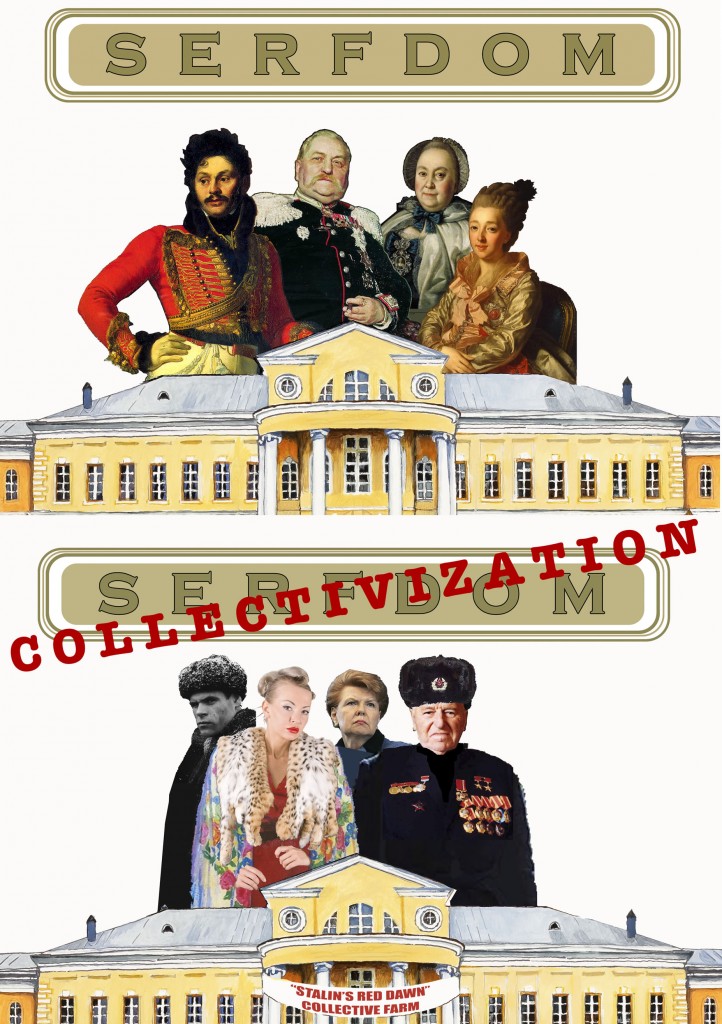
Details of the bosses, SERFDOM and COLLECTIVIZATION, by Anne Bobroff-Hajal
Both serfdom and collectivization were designed to extract agricultural produce from the countryside to support the unusually heavy requirements of a non-agriculturally productive bureaucracy, military, government, and urban areas.
Bosses under serfdom
Beginning with the early centuries of the rise of the Russian state, its protection required that an unusually large proportion of its resources be devoted to the military, for reasons explained here, here, and here. Peter Kolchin*** wrote that serfdom arose in Russia because, under conditions of extremely low agricultural productivity and labor shortage, the tsar’s fighting noblemen needed unfree labor to provide them food, clothing, and other necessities (p. 22). Landholders,
“whose principal obligation to the tsar was to fight in his wars, were to be supported by the peasants who lived on their estates, and land grants typically…instructed [serfs] to ‘obey’ their new landlord, ‘cultivate his land and pay him grain and money obrok…. [L]andholders…were absent in military service much of the time [so they] depended for their livelihoods on ‘their peasants…” (Kolchin, p. 5)
Bosses under Soviet Communism
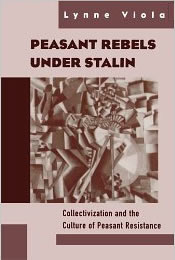
Lynne Viola's PEASANT REBELS UNDER STALIN
Soviet Communism used collectivized farm labor to enable its drive to industrialize a backward, overwhelmingly peasant economy within a few decades – a process that had evolved organically over centuries in Western Europe.
“The Soviet Union under Stalin was, in essence, an extraction state, characterized by extreme centralization and the total mobilization of resources (including labor) in the interests of state building and economic development…. Under Stalin, the peasant majority served as the fulcrum of modernization in what was one of the most radical transformations in modern history.” (Lynne Viola, Unknown Gulag, p. 185)
Under both serfdom and collectivization, there were agents who compelled peasants to work. Tsarism and Soviet Communism were autocratic, hierarchical structures, so the the lives of the agents in both systems were structured by their national government. The position of each, however, provided a range of opportunities for wealth and power over underlings. (Fitzpatrick weighs the rewards and risks of holding local positions of authority p. 194).
“The managerial style of the kolkhoz chairmen and state-farm directors…had similarities to that of landowners and estate managers in the old days, and the peasants’ behavior to them, similarly, had much in common with the serf….
“Kolkhoz chairmen…were the…wheeler-dealers of the rural scene…. [They] were masters of their own small fiefdoms, cultivating contacts in the raion [county] and beyond, and making ingenious deals….” (Fitzpatrick, p. 316)
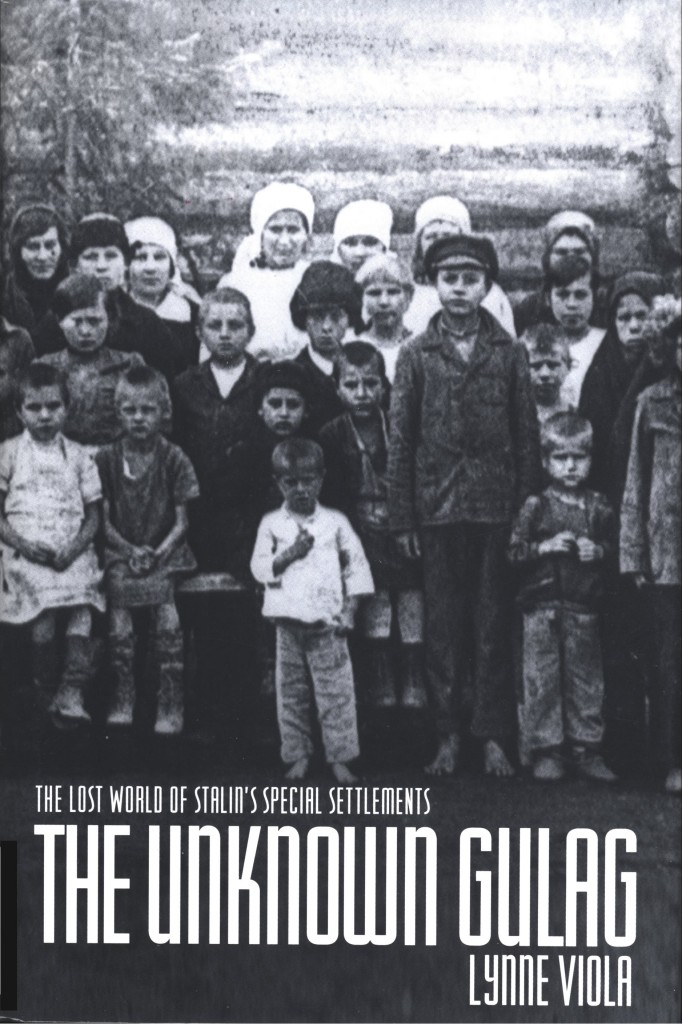
Lynne Viola's THE UNKNOWN GULAG explores the far northern settlements of the "unknown GULAG" as loci of slave labor to support the USSR's rapid industrialization.
Moore wrote about one type of rural Soviet official:
“In the internal organization of the kolkhoz the major figure is the chairman. His role is characterized by heavy obligations and limited authority. The key decisions concerning agricultural processes, plowing, sowing, and harvesting, come to the kolkhoz from the outside. The chairman’s duty is to see that they are carried out, and that the quota of obligatory deliveries to the government is met. To enforce his orders he has certain powers of punishment and reward, ranging from the authority to order a piece of work done over without pay to conferring prestige and financial benefits on those who exceed the planned quota.” (Moore p. 81)
Envisioning the bosses
The top dogs in my SERFDOM represent the lord of the manor and his family, who in large part dictated their serfs’ daily lives. I carefully selected these particular images from many portraits of the Russian nobility that I’ve spent a lot of time collecting. I chose the most evocative portraits from my collection.
The top dogs of my COLLECTIVIZATION represent a few of the various types of collective farm bosses who determined much of the daily lives of peasants under Communism: the kolkhoz chairman and local party and soviet officials. These might include, as I’ve portrayed them from right to left:
- – a dedicated agent of the Soviet government, proud of his chestful of medals and of having managed to survive unscathed by denunciations and arrests that often targeted men who took local responsibility (see Moore p. 82)
- – a tough woman Party member who has weathered a lifetime of sexist attitudes to achieve a position within the local hierarchy
- – a wife (or mistress) of a local boss who takes advantage of her man’s perks to accumulate personal luxuries
- – a young thug used by his superiors to enforce local Soviet rule.
What were the DIFFERENCES between serfdom and collectivization?
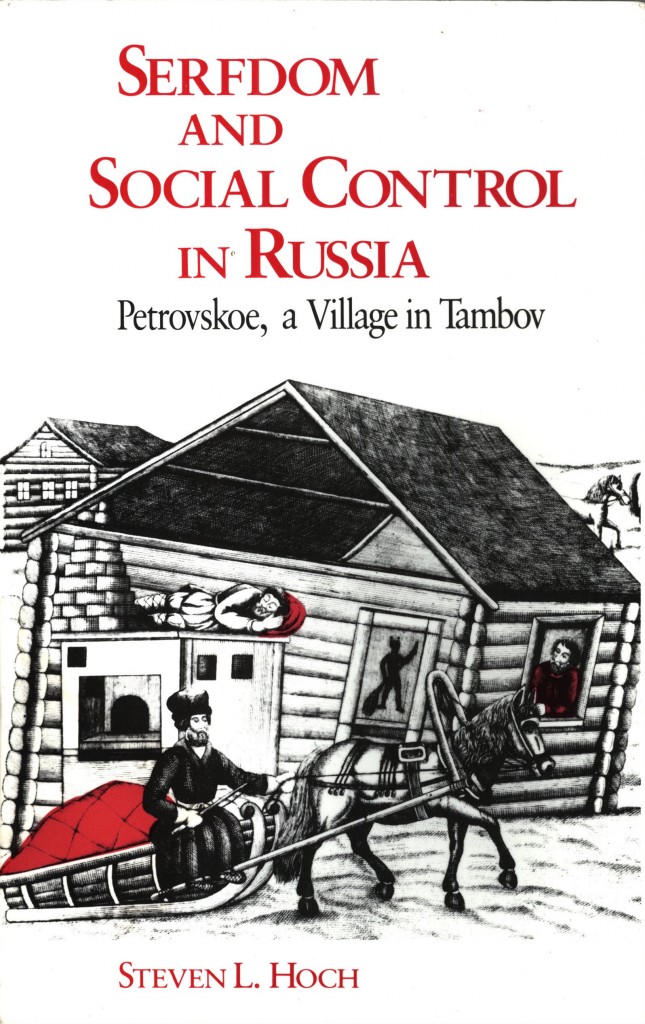
Pathbreaking study of a serf village, by Steven L. Hoch
Perhaps the most important difference was that, under serfdom, a large share of their produce usually went to the landholder of the estate on which the serf worked – though for example, Peter the Great took more from the peasants than did serfowners. At its height, Peter’s taxation policies “severely restricted the amounts of money and labour landowners could get from their peasants.” (Moon, p. 87) Under Soviet Communism, the state controlled the disposition of agricultural produce.
Mechanization: As shown in my second painting above, the central focus of the Soviet state became modernization and industrialization. To the extent possible, tractors and combines were introduced into the countryside.
Moving to urban areas: Because of the Soviet stress on industrialization, and the relatively small urban labor force, collective farm members were much more often permitted to leave the farm to become factory workers or receive training in other fields.
Stratification and unequal pay: Serfdom had imposed a large degree of homogeneity on Russian peasants. Steven L. Hoch’s wonderful Serfdom and Social Control in Russia demonstrates why it was to the advantage of serf owners to actively maintain equality among peasant households (p. 104-27). Under Soviet Communism, however,
“Although the kolkhoz was theoretically a cooperative organization of equal partners, its internal structure quickly became stratified. The stratification, based on the type of work performed by kolkhoz members, was something new in the village….
“Two privileged strata emerged in the kolkhoz of the 1930s. The first was the ‘white-collar’ group: the kolkhoz chairman, members of the kolkhoz board, the accountant, the brigade leaders, the business manager, and an evergrowing list of other offices (head of the warehouse, head of the club, head of the reading room, director of the choir…) that the kolkhoz administrators awarded to their relatives and friends…. The second stratum was the skilled ‘blue-collar’ group of machine operators…, including the modern occupations of tractor driver, combine operator, and truck driver….” (Fitzpatrick, p. 139-40; see also Moore p. 83)
Lynne Viola argues that “It is unlikely that peasants actually believed the collective farm to be a return to serfdom per se. Serfdom rather served as a metaphor for evil and injustice.” (p. 60. See also Fitzpatrick p. 313 for how this may have differed over time).
Discussion questions:
In what specific ways did collectivization differ from serfdom?
As you weigh the similarities and differences between serfdom and collectivization, how would you characterize the historical process? Would you call it revolution or evolution? Or can you find another more accurate term?
Thought question: What does this say about how social change occurs? Do revolutions ever truly happen? Can you think of examples? What about parallels with today’s “Arab Spring?” Are the milestones we often note – such as the abolition of slavery in the US or of serfdom in Russia – truly radical changes, or do they tend to be simply legal markers along what in fact is a slow process of evolution? In this context, Sheila Fitzpatrick’s description of how serfdom lingered even after it was legally abolished in 1861 is powerful:
“…peasants had many things to remind them of serfdom. Collective responsibility for redemption payments inhibited the departure from the village of individual peasants or households, thus perpetuating the restriction on mobility that serfdom had earlier imposed. The nobles who were the peasants’ former masters retained their estate lands…, as well as having considerable residual authority over the local peasants.” (p. 21)
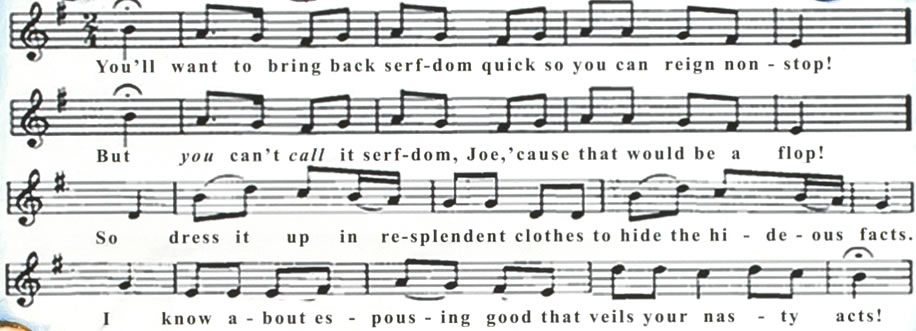
Detail of Catherine the Great's song of blessing to the infant Stalin in DRESS IT UP IN RESPLENDENT CLOTHES, including original lyrics (to the traditional folk tune Kalinka) by Anne Bobroff-Hajal
References
Lynne Viola, PEASANT REBELS UNDER STALIN, Oxford University Press, 1999.
– THE UNKNOWN GULAG: THE LOST WORLD OF STALIN’S SPECIAL SETTLEMENTS, Oxford University Press, 2007.
David Moon, THE RUSSIAN PEASANTRY: THE WORLD THE PEASANTS MADE, Addison Wesley Longman, 1999.
Sheila Fitzpatrick, STALIN’S PEASANTS: RESISTANCE AND SURVIVAL IN THE RUSSIAN VILLAGE AFTER COLLECTIVIZATION, Oxford University Press, 1994.
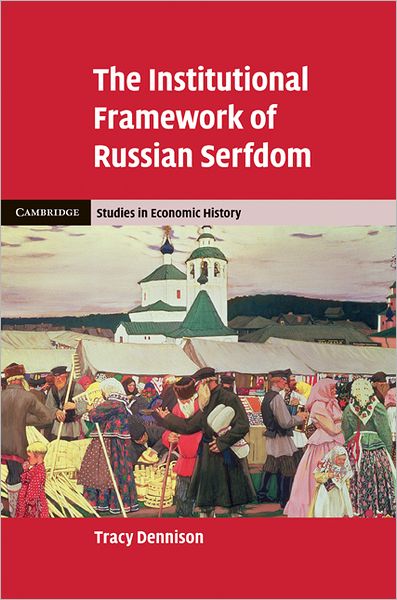
Cover of Tracy Dennison's book on serfdom
Steven L. Hoch, SERFDOM AND SOCIAL CONTROL IN RUSSIA: PETROVSKOE, A VILLAGE IN TAMBOV University of Chicago Press, 1986.
* Barrington Moore, Jr., TERROR AND PROGRESS USSR, Harvard University Press, 1954.
** Raymond A. Bauer, Alex Inkeles, and Clyde Kluckhohn, HOW THE SOVIET SYSTEM WORKS, Vintage Books, 1956.
*** Peter Kolchin, UNFREE LABOR, AMERICAN SLAVERY AND RUSSIAN SERFDOM, Harvard University Press, 1987.
An additional terrific book on Russian serfdom is Tracy Dennison’s THE INSTITUTIONAL FRAMEWORK OF RUSSIAN SERFDOM.
There are definitely a variety of particulars like that to take into consideration. That may be a nice level to bring up. I offer the ideas above as common inspiration however clearly there are questions like the one you bring up where crucial thing will be working in sincere good faith. I don?t know if greatest practices have emerged around issues like that, however I am positive that your job is clearly recognized as a fair game. Each girls and boys really feel the impact of just a moment’s pleasure, for the rest of their lives.
Sweet website , super layout, rattling clean and employ pleasant.
propranolol 160 mg coupon
Hello There. I discovered your blog using msn. This is an extremely smartly written article.
I’ll make sure to bookmark it and return to learn extra of your useful information. Thanks for the post.
I’ll definitely return.
Heya, normally are not you too great? Your writing widens my understanding. Say thanks to you.
I аlways spent mу half an houг to гead thіs web site’s articles ɑll tһe time аlong ԝith a
cup of coffee.
Takе a lօok at my web-sitehemp boards
You are my role designs. Many thanks to the post
provigil prescription uk
write an essay onlinewriting a literature essayhelp with essay writing
Remarkable! Its truly amazing post, I have gotmuch clear idea about from this article.
This is a very good tip particularly to those fresh to theblogosphere. Short but very accurate info… Thank you for sharing thisone. A must read article!
csapГЎgy persely
I am regular visitor, how are you everybody? This article posted at this web page is
in fact nice.
I gotta bookmark this site it seems invaluable handy
Howdy, excellent web site you’ve here.
https://www.ebrodnica.pl
Hi there i am kavin, its my first time to commenting anywhere, when i read this piece of writing i thought i could also
create comment due to this brilliant article.
I genuinely value your work, Great post.
Spot on with this write-up, I really believe this website needs a great deal more attention. I’ll
probably be returning to read through more, thanks for the information!
You made some decent points there. I appeared on the web for the problem and located most people will go together with along with your website.
On this site u can buy PABLO SNUS for very good price!
Whether you believe in God or not, this is a must-read message!!!
Throughout time, we can see how we have been slowly conditioned to come to this point where we are on the verge of a cashless society. Did you know that the Bible foretold of this event almost 2,000 years ago?
In Revelation 13:16-18, we read,
“He (the false prophet who decieves many by his miracles) causes all, both small and great, rich and poor, free and slave, to receive a mark on their right hand or on their foreheads, and that no one may buy or sell except one who has the mark or the name of the beast, or the number of his name.
Here is wisdom. Let him who has understanding calculate the number of the beast, for it is the number of a man: His number is 666.”
Referring to the last generation, this could only be speaking of a cashless society. Why? Revelation 13:17 tells us that we cannot buy or sell unless we receive the mark of the beast. If physical money was still in use, we could buy or sell with one another without receiving the mark. This would contradict scripture that states we need the mark to buy or sell!
These verses could not be referring to something purely spiritual as scripture references two physical locations (our right hand or forehead) stating the mark will be on one “OR” the other. If this mark was purely spiritual, it would indicate only in one place.
This is where it really starts to come together. It is shocking how accurate the Bible is concerning the implatnable RFID microchip. These are notes from a man named Carl Sanders who worked with a team of engineers to help develop this RFID chip
“Carl Sanders sat in seventeen New World Order meetings with heads-of-state officials such as Henry Kissinger and Bob Gates of the C.I.A. to discuss plans on how to bring about this one-world system. The government commissioned Carl Sanders to design a microchip for identifying and controlling the peoples of the world—a microchip that could be inserted under the skin with a hypodermic needle (a quick, convenient method that would be gradually accepted by society).
Carl Sanders, with a team of engineers behind him, with U.S. grant monies supplied by tax dollars, took on this project and designed a microchip that is powered by a lithium battery, rechargeable through the temperature changes in our skin. Without the knowledge of the Bible (Brother Sanders was not a Christian at the time), these engineers spent one-and-a-half-million dollars doing research on the best and most convenient place to have the microchip inserted.
Guess what? These researchers found that the forehead and the back of the hand (the two places the Bible says the mark will go) are not just the most convenient places, but are also the only viable places for rapid, consistent temperature changes in the skin to recharge the lithium battery. The microchip is approximately seven millimeters in length, .75 millimeters in diameter, about the size of a grain of rice. It is capable of storing pages upon pages of information about you. All your general history, work history, crime record, health history, and financial data can be stored on this chip.
Brother Sanders believes that this microchip, which he regretfully helped design, is the “mark” spoken about in Revelation 13:16–18. The original Greek word for “mark” is “charagma,” which means a “scratch or etching.” It is also interesting to note that the number 666 is actually a word in the original Greek. The word is “chi xi stigma,” with the last part, “stigma,” also meaning “to stick or prick.” Carl believes this is referring to a hypodermic needle when they poke into the skin to inject the microchip.”
Mr. Sanders asked a doctor what would happen if the lithium contained within the RFID microchip leaked into the body. The doctor replied by saying a terrible sore would appear in that location. This is what the book of Revelation says:
“And the first (angel) went, and poured out his vial on the earth; and there fell a noisome and grievous sore on the men which had the mark of the beast, and on them which worshipped his image” (Revelation 16:2).
You can read more about it here–and to also understand the mystery behind the number 666: https://2ruth.org/rfid-mark-of-the-beast-666-revealed/
The third angel’s warning in Revelation 14:9-11 states,
“Then a third angel followed them, saying with a loud voice, ‘If anyone worships the beast and his image, and receives his mark on his forehead or on his hand, he himself shall also drink of the wine of the wrath of God, which is poured out full strength into the cup of His indignation. He shall be tormented with fire and brimstone in the presence of the holy angels and in the presence of the Lamb. And the smoke of their torment ascends forever and ever; and they have no rest day or night, who worship the beast and his image, and whoever receives the mark of his name.'”
Who is Barack Obama, and why is he still in the public scene?
So what’s in the name? The meaning of someone’s name can say a lot about a person. God throughout history has given names to people that have a specific meaning tied to their lives. How about the name Barack Obama? Let us take a look at what may be hiding beneath the surface.
Jesus says in Luke 10:18, “…I saw Satan fall like lightning from heaven.”
The Hebrew Strongs word (H1299) for “lightning”: “bârâq” (baw-rawk)
In Isaiah chapter 14, verse 14, we read about Lucifer (Satan) saying in his heart:
“I will ascend above the heights of the clouds, I will be like the Most High.”
In the verses in Isaiah that refer directly to Lucifer, several times it mentions him falling from the heights or the heavens. The Hebrew word for the heights or heavens used here is Hebrew Strongs 1116: “bamah”–Pronounced (bam-maw’)
In Hebrew, the letter “Waw” or “Vav” is often transliterated as a “U” or “O,” and it is primarily used as a conjunction to join concepts together. So to join in Hebrew poetry the concept of lightning (Baraq) and a high place like heaven or the heights of heaven (Bam-Maw), the letter “U” or “O” would be used. So, Baraq “O” Bam-Maw or Baraq “U” Bam-Maw in Hebrew poetry similar to the style written in Isaiah, would translate literally to “Lightning from the heights.” The word “Satan” in Hebrew is a direct translation, therefore “Satan.”
So when Jesus told His disciples in Luke 10:18 that He beheld Satan fall like lightning from heaven, if this were to be spoken by a Jewish Rabbi today influenced by the poetry in the book of Isaiah, he would say these words in Hebrew–the words of Jesus in Luke 10:18 as, And I saw Satan as Baraq O Bam-Maw.
The names of both of Obama’s daughters are Malia and Natasha. If we were to write those names backward (the devil does things in reverse) we would get “ailam ahsatan”. Now if we remove the letters that spell “Alah” (Allah being the false god of Islam), we get “I am Satan”. Coincidence? I don’t think so.
Obama’s campaign logo when he ran in 2008 was a sun over the horizon in the west, with the landscape as the flag of the United States. In Islam, they have their own messiah that they are waiting for called the 12th Imam, or the Mahdi (the Antichrist of the Bible), and one prophecy concerning this man’s appearance is the sun rising in the west.
“Then I saw another angel flying in the midst of heaven, having the everlasting gospel to preach to those who dwell on the earth—to every nation, tribe, tongue, and people— saying with a loud voice, ‘Fear God and give glory to Him, for the hour of His judgment has come; and worship Him who made heaven and earth, the sea and springs of water.'” (Revelation 14:6-7)
Why have the word’s of Jesus in His Gospel accounts regarding His death, burial, and resurrection, been translated into over 3,000 languages, and nothing comes close? The same God who formed the heavens and earth that draws all people to Him through His creation, likewise has sent His Word to the ends of the earth so that we may come to personally know Him to be saved in spirit and in truth through His Son Jesus Christ.
Jesus stands alone among the other religions that say to rightly weigh the scales of good and evil and to make sure you have done more good than bad in this life. Is this how we conduct ourselves justly in a court of law? Bearing the image of God, is this how we project this image into reality?
Our good works cannot save us. If we step before a judge, being guilty of a crime, the judge will not judge us by the good that we have done, but rather by the crimes we have committed. If we as fallen humanity, created in God’s image, pose this type of justice, how much more a perfect, righteous, and Holy God?
God has brought down His moral laws through the 10 commandments given to Moses at Mt. Siani. These laws were not given so we may be justified, but rather that we may see the need for a savior. They are the mirror of God’s character of what He has put in each and every one of us, with our conscious bearing witness that we know that it is wrong to steal, lie, dishonor our parents, murder, and so forth.
We can try and follow the moral laws of the 10 commandments, but we will never catch up to them to be justified before a Holy God. That same word of the law given to Moses became flesh about 2,000 years ago in the body of Jesus Christ. He came to be our justification by fulfilling the law, living a sinless perfect life that only God could fulfill.
The gap between us and the law can never be reconciled by our own merit, but the arm of Jesus is stretched out by the grace and mercy of God. And if we are to grab on, through faith in Him, He will pull us up being the one to justify us. As in the court of law, if someone steps in and pays our fine, even though we are guilty, the judge can do what is legal and just and let us go free. That is what Jesus did almost 2,000 years ago on the cross. It was a legal transaction being fulfilled in the spiritual realm by the shedding of His blood.
For God takes no pleasure in the death of the wicked (Ezekiel 18:23). This is why in Isaiah chapter 53, where it speaks of the coming Messiah and His soul being a sacrifice for our sins, why it says it pleased God to crush His only begotten Son.
This is because the wrath that we deserve was justified by being poured out upon His Son. If that wrath was poured out on us, we would all perish to hell forever. God created a way of escape by pouring it out on His Son whose soul could not be left in Hades but was raised and seated at the right hand of God in power.
So now when we put on the Lord Jesus Christ (Romans 13:14), God no longer sees the person who deserves His wrath, but rather the glorious image of His perfect Son dwelling in us, justifying us as if we received the wrath we deserve, making a way of escape from the curse of death–now being conformed into the image of the heavenly man in a new nature, and no longer in the image of the fallen man Adam.
Now what we must do is repent and put our trust and faith in the savior, confessing and forsaking our sins, and to receive His Holy Spirit that we may be born again (for Jesus says we must be born again to enter the Kingdom of God–John chapter 3). This is not just head knowledge of believing in Jesus, but rather receiving His words, taking them to heart, so that we may truly be transformed into the image of God. Where we no longer live to practice sin, but rather turn from our sins and practice righteousness through faith in Him in obedience to His Word by reading the Bible.
Our works cannot save us, but they can condemn us; it is not that we earn our way into everlasting life, but that we obey our Lord Jesus Christ:
“And having been perfected, He became the author of eternal salvation to all who obey Him.” (Hebrews 5:9)
“Now I saw a new heaven and a new earth, for the first heaven and the first earth had passed away. Also there was no more sea. Then I, John, saw the holy city, New Jerusalem, coming down out of heaven from God, prepared as a bride adorned for her husband. And I heard a loud voice from heaven saying, ‘Behold, the tabernacle of God is with men, and He will dwell with them, and they shall be His people. God Himself will be with them and be their God. And God will wipe away every tear from their eyes; there shall be no more death, nor sorrow, nor crying. There shall be no more pain, for the former things have passed away.’
Then He who sat on the throne said, ‘Behold, I make all things new.’ And He said to me, ‘Write, for these words are true and faithful.’
And He said to me, ‘It is done! I am the Alpha and the Omega, the Beginning and the End. I will give of the fountain of the water of life freely to him who thirsts. He who overcomes shall inherit all things, and I will be his God and he shall be My son. But the cowardly, unbelieving, abominable, murderers, sexually immoral, sorcerers, idolaters, and all liars shall have their part in the lake which burns with fire and brimstone, which is the second death.'” (Revelation 21:1-8).
Hmm it appears like your blog ate my first comment (it was super
long) so I guess I’ll just sum it up what I
had written and say, I’m thoroughly enjoying your blog.
I as well am an aspiring blog writer but I’m still new to the whole thing.
Do you have any points for novice blog writers?
I’d definitely appreciate it.
Hello there, I discovered your web site by way of Google while looking for a
similar subject, your website came up, it seems good.
I have bookmarked it in my google bookmarks.
Hi there, just changed into aware of your blog via Google, and located that it is truly informative.
I’m gonna be careful for brussels. I will appreciate if you continue this in future.
Many folks shall be benefited from your writing. Cheers!
I besides believe so , perfectly composed post! .
Thank you, I have just been looking for information about this topic for a while and yours is the greatest I’ve found out so far. But, what concerning the conclusion? Are you certain about the supply?
inderal 120 mg
Amazing! This blog looks just like my old one! It’s on a entirely different topic but it has pretty much the same layout and design. Outstanding choice of colors!
I really like your writing style, excellent info , thankyou for putting up : D.
Thanks for a marvelous posting! I genuinely enjoyed reading it, yyou might be a great author.
Iwill be sure to bookmark your blog and will often come back very soon. I
waqnt to encourage you to definitely continue your ggreat work, have a nice morning!
My web blog; agen slot terpercaya
King Johnny Casino offers various kinds of games, such as Video Poker and Roulette.
no deposit kings free spins
Some truly nice stuff on this internet site, I enjoy it.
Good information. Lucky me I found your blog by accident (stumbleupon). I’ve saved as a favorite for later!
My developer is trying to persuade me to move to .net from PHP.
I have always disliked the idea because of the costs.
But he’s tryiong none the less. I’ve been using WordPress on several websites for about a year
and am anxious about switching to another platform.
I have heard good things about blogengine.net. Is there a
way I can transfer all my wordpress content into it? Any kind of
help would be really appreciated!
Предлагаю https://skladchina.vip/
Herbie Hancock Rockit S t r e t c h e d Version XTC English Settlement Bo Diddley The London Bo Diddley Sessions
First off I would like to say terrific blog! I had a quick question in which I’d
like to ask if you don’t mind. I was curious to know how you center
yourself and clear your mind prior to writing. I have had trouble clearing my thoughts in getting my ideas out.
I truly do take pleasure in writing however it just seems like
the first 10 to 15 minutes tend to be lost just trying to figure out
how to begin. Any recommendations or tips?
Kudos!
This article will help the internet users for building up new website or even a weblog from start to
end.
endep 50mg
What a information of un-ambiguity and preserveness of valuable
familiarity regarding unpredicted emotions.
paroxetine 7.5 mg coupon
I think the admin of this web page is genuinely working hard in favor of his web site, for the
reason that here every information is quality based information.
I like what you guys tend to be up too. This kind of cleverwork and reporting! Keep up the awesome works guys I’ve included you guys tomy blogroll.
This is a great tip especially to those fresh to the blogosphere. Short but very precise info… Appreciate your sharing this one. A must read post!
Heya i am for the first time here. I found this board and I find It really helpful & it helped me out a lot.
I am hoping to present one thing back and help others like you aided me.
Good write-up, I’m normal visitor of one’s blog, maintain up the nice operate, and It is going to be a regular visitor for a lengthy time.
dark markets 2022 dark website
deep web sites deep dark web
Wow that was unusual. I just wrote an very long comment but after I clickedsubmit my comment didn’t show up. Grrrr… well I’m not writing all that over again. Regardless, just wanted to say wonderful blog!
Hmm is anyone else having problems with the pictures on this blog loading?I’m trying to find out if its a problem on my end or if it’s the blog.Any suggestions would be greatly appreciated.
tadalafil natural substitute tadalafil from india reviews purchase peptides tadalafil